

Nour El Nabawy is a familiar face to anyone who has followed Egyptian television and cinema over the past few years, but there is more to him than the roles he played. The son of acclaimed actor Khaled El Nabawy, Nour El Nabawy, grew up in a household where performance was part of the air he breathed. His on-screen journey began quietly in The Choice 2: Men of Shadow in 2021, but he soon found himself moving between projects with a natural ease, from Naql A’am (Public Transport) and Rageen Ya Hawa (Back to Love) in 2022, to Al Kateba 101 (Battalion 101) and El Aghar in 2023. Each role shaped him, but it was 2024’s El Hareefa (The Footballers) that marked a turning point, establishing him not just as a star but as a young actor with the kind of presence that lingers long after the credits roll. Enigma’s Farida Elserty spoke with the superstar, delving deeper beneath the headlines, beyond the posters, to understand the dreams, routines, and choices of an actor navigating fame, craft, and the pursuit of a life lived on his own terms.
Nour El Nabawy picked up the phone for the interview during a frantic gap between scenes. In the background, the Kan Ya Makan (Once Upon a Time) set is a blur of noise, shouted cues and passing footsteps, followed by a sudden beat of silence before he started to speak. We talked in the small, rushed windows his schedule allowed; the kind of moments that usually just disappear into the day.
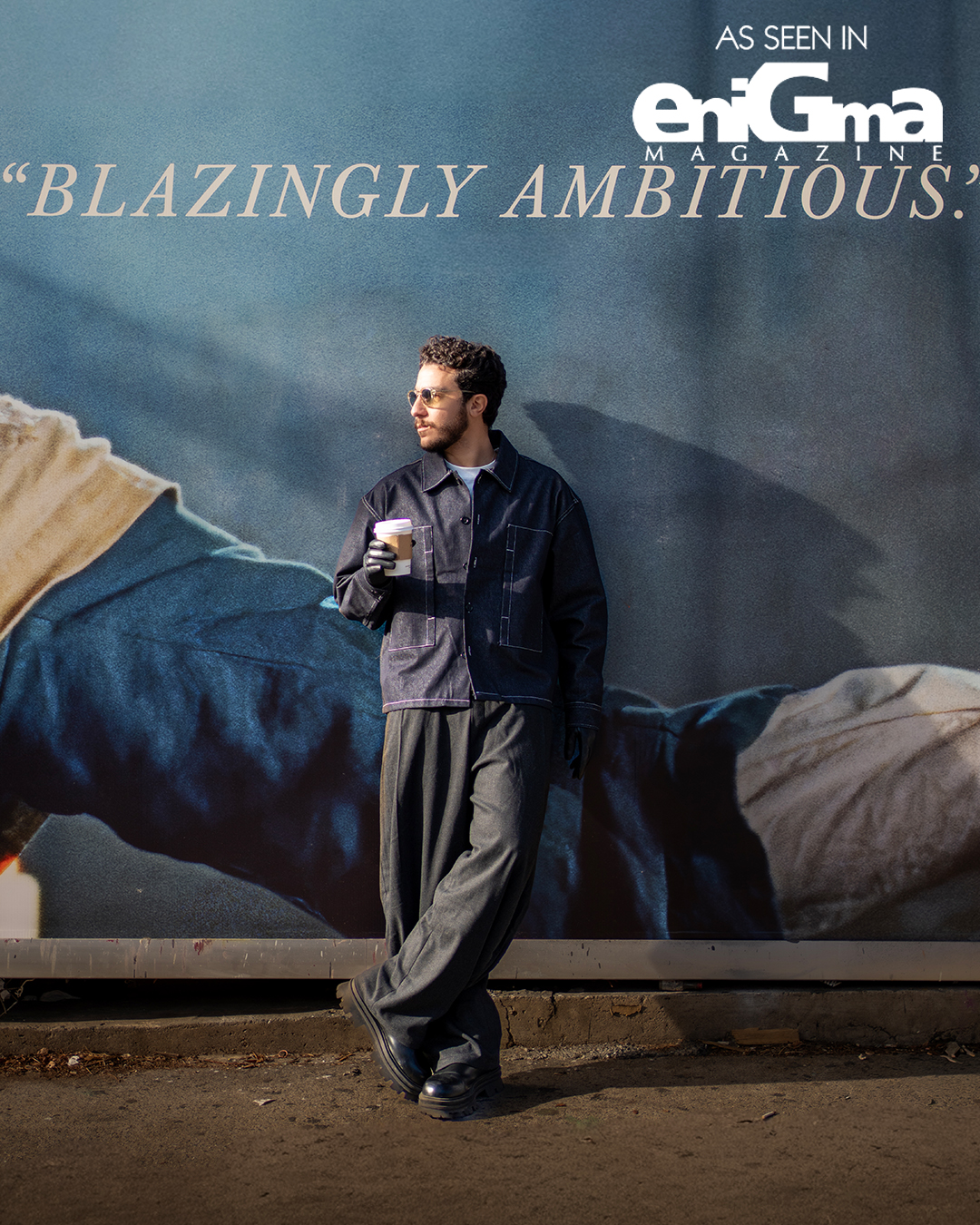
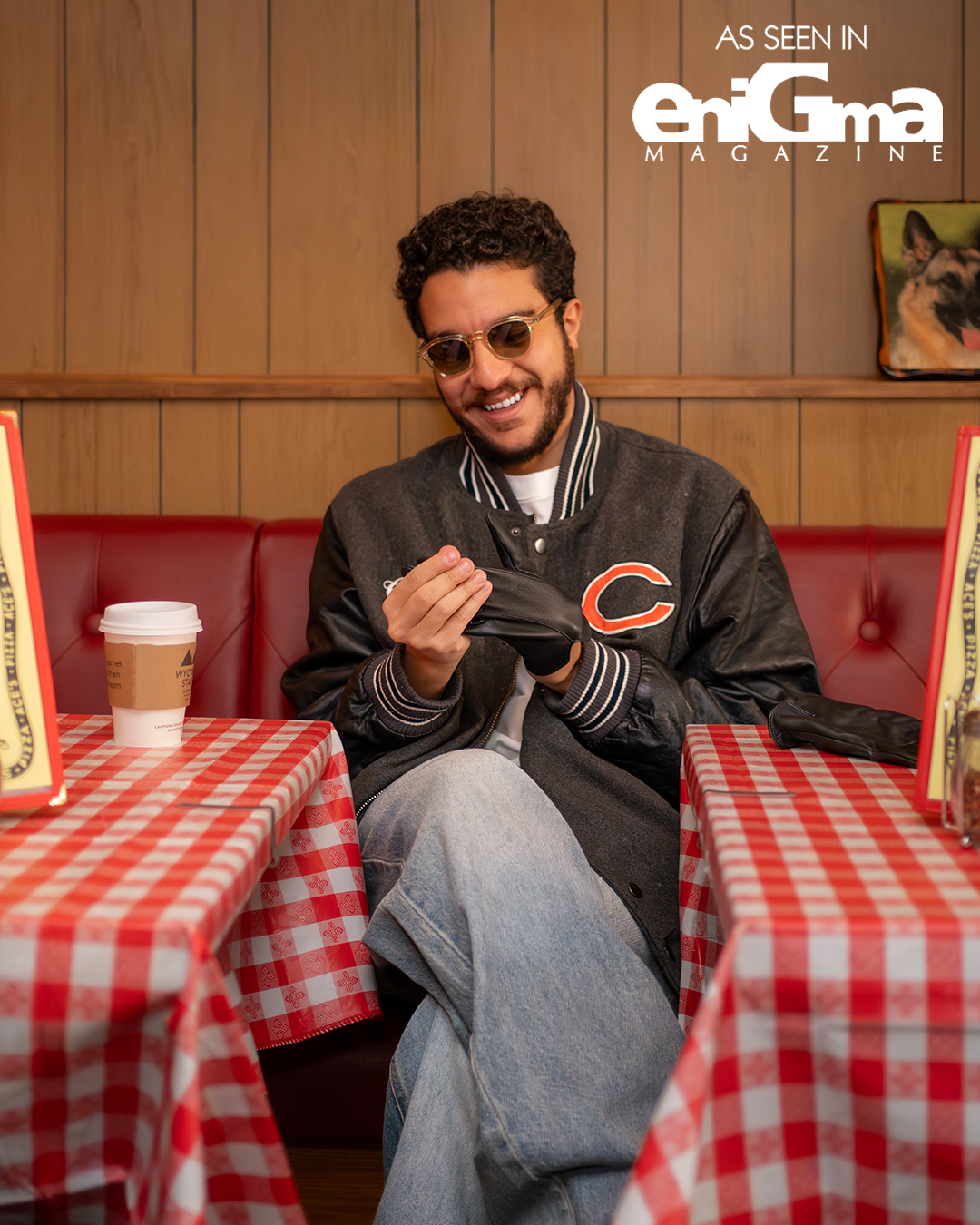
We spoke shortly after his Enigma’s shoot in New York, a short break from Cairo that took him into a completely different rhythm. The photos from that trip were polished and precise. The conversation was not. El Nabawy speaks easily and naturally, as if he’s still getting used to the fact that his private life now exists alongside a public one. There is no performance in his voice, just focus and an awareness of the world moving around him.
When the subject turned to life before acting, his answers were practical rather than nostalgic. “I had phases,” he said. “When I was in Cairo and still in school, I spent most of my time with my friends. That was my life, really.” Later, studying in the US, his days became quieter and more inward. “It was mostly reading, studying film, hanging with friends, and going to the movies.”
What he has kept from those years is not a place or a memory, but a routine. “I still go out with my friends, the same school friends,” he said. “I still watch movies and hang out with friends.” It is a small way of staying grounded, even as his work takes him far from home.
Before acting, he was already working with film industry differently. “I always loved editing,” he asserted. He would cut together clips for his father and upload them online until they were taken down for copyright reasons. “I edited actors’ best scenes and put them on YouTube, but they would get taken down because of copyright.”
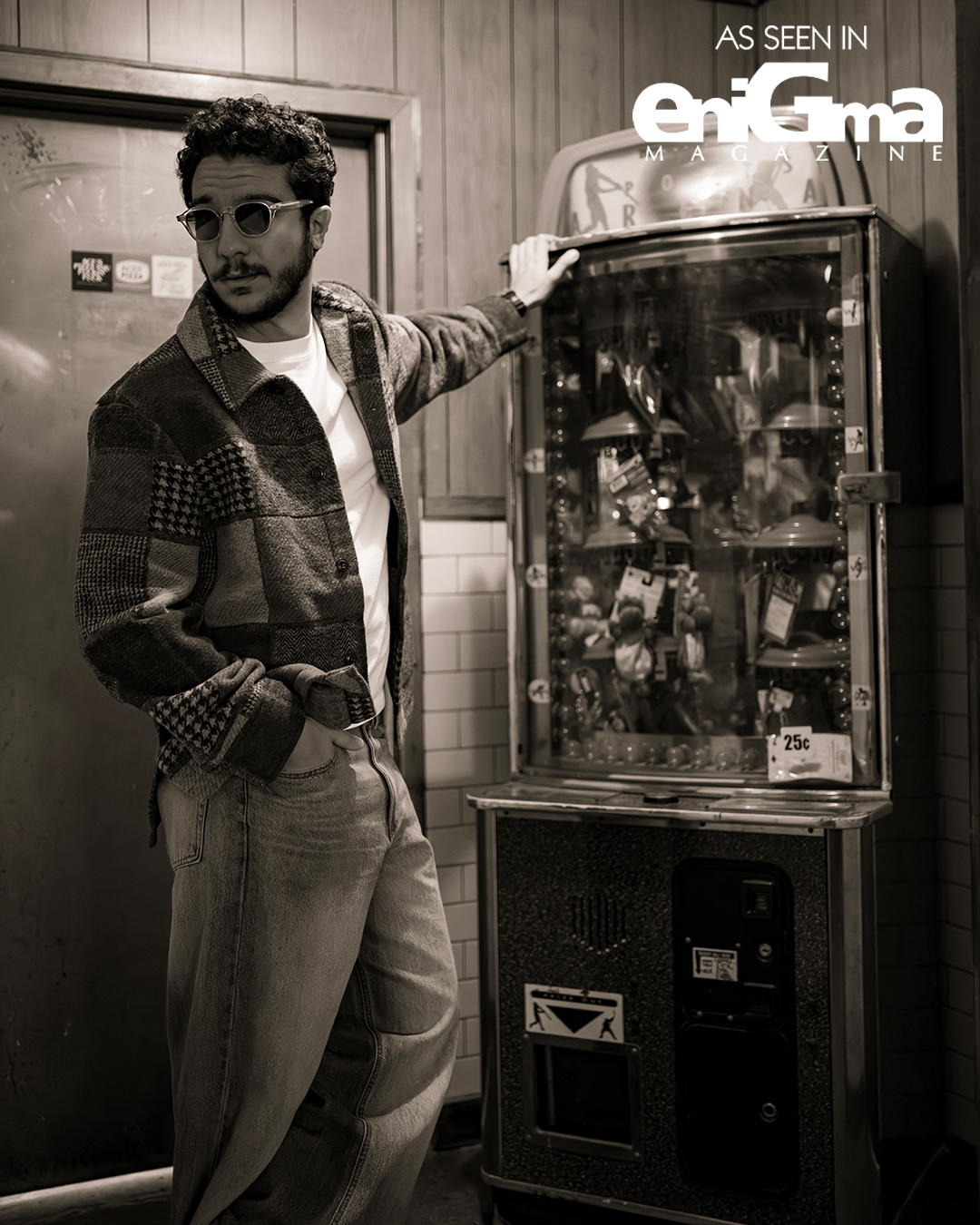
Other interests were circling the edges. Music, cooking, and the idea of becoming a chef. But even those alternatives pointed in the same direction. “It’s always been acting,” he said, without emphasis. “To be an entertainer.”
However, at first, El Nabawy considered a very different path. “In fact, I tried to study economics, but it didn’t work out,” he said, a hint of a smile in his voice. Instead, he found himself drawn to film and directing, a shift that would quietly shape the way he sees the world. “Studying film is studying the human anatomy and how human beings think. For this reason, I became an observer. I am interested in knowing how people act, think, and feel.”
That perspective shapes more than just his work. Watching a scene play out is no longer simply a professional skill; it has become a way for him to read the world. He notices the small gestures, the silences, the subtle choices that reveal who people really are. That careful attention to human detail stays with him, even when the cameras are off, and the set is quiet.
And yet, there is another side of El Nabawy, one that exists beyond the roles and the rehearsals. “I’m trying to be the best version of myself as a man,” he said thoughtfully. “I try to evolve, and I also try to feel everyting around me. I try to find things that move me.” For him, movies are a window into that feeling, conversations are a spark, and even food can offer it. In those simple acts, he is not the actor the public knows, but a man quietly navigating his own growth, curiosity, and appetite for life.
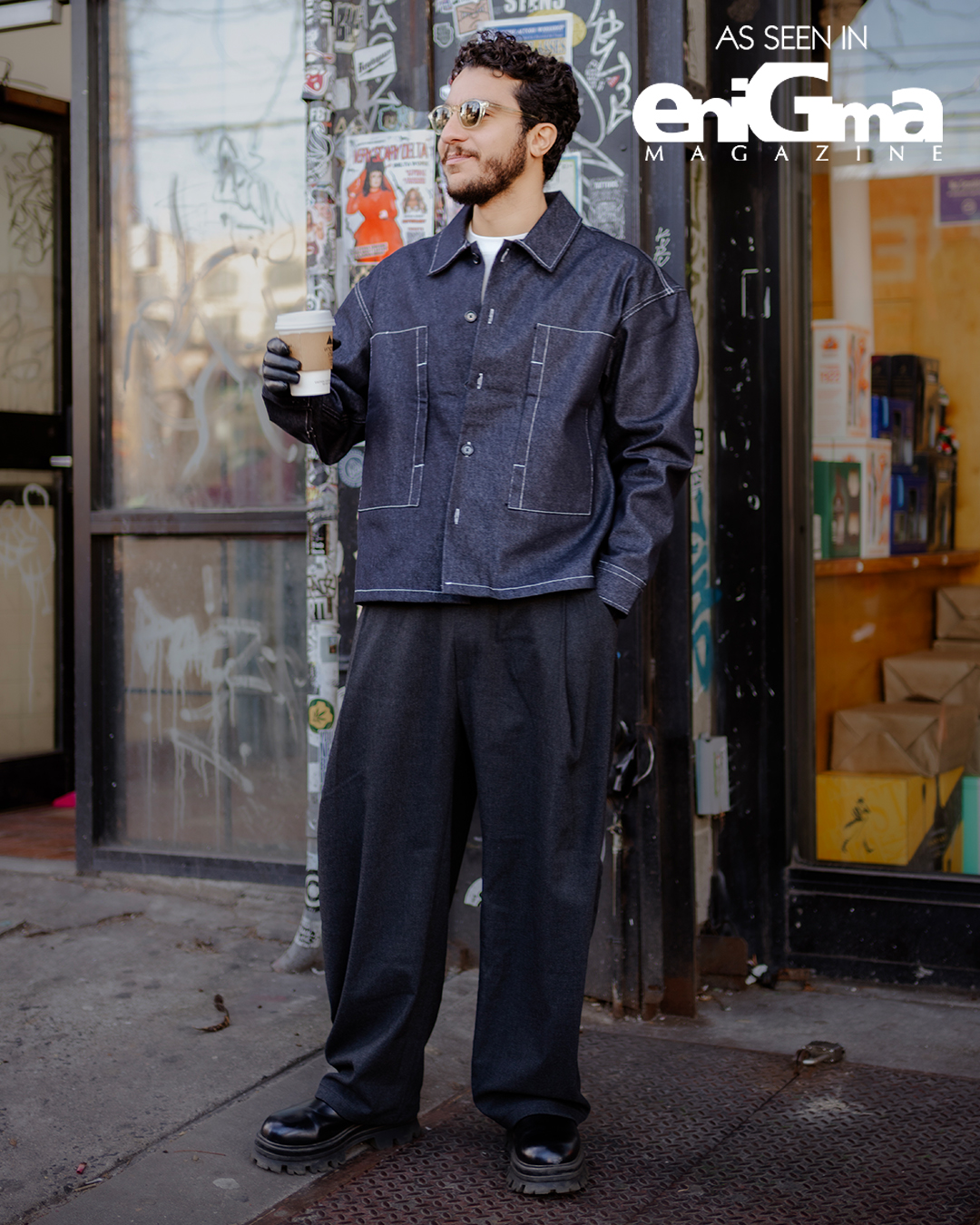
Even amid long shoots, fan attention, and a growing career, El Nabawy has found simple ways to stay grounded. “When I wake up, I breathe and pray,” he said quietly. It is a small ritual, private and unassuming, yet it shapes his mornings and, by extension, his approach to the day. There is something about the deliberate pause of breath and thought that seems to anchor him.
And yet, the calm he projects is, in part, a choice. “Good thing I appear calm and composed because I am not always so,” he admitted. Passionate, restless, driven, that is closer to the truth. It is not fame or success that fuels him, but an almost insatiable need to create. “I want to do as many movies as I can. I want to be as real as possible, and that takes your whole life.” Even in conversation, it is clear that El Nabawy’s intensity is quiet but firm, a steady undercurrent beneath the outward ease.
Even for someone rising in the industry, doubts are never far away. “Doubted, yes,” El Nabawy asserted. “I always feel like I could see myself in a way that the industry and people don’t agree with, but I never wanted to walk away. So I’ve always thought, ‘How do I solve everything?’ If I see a problem, I want to solve it because I love this job.” There is no melodrama in his words, only a determination. For this star, challenges are not a reason to quit; they are puzzles to be worked through.
Acting, he said, did not arrive because he chased it. “No, it found me. I wanted it, and I didn’t chase it, and then I found myself doing it.” Even a detour into economics and the pause of COVID could not derail the path. Returning to Egypt offered opportunities that had been impossible elsewhere, and suddenly, what had always been an interest became an undeniable calling.
And yet, the work continues to push him outside his comfort zone. The roles that both frighten and excite him are those that demand extremes. “I’m scared of extreme characters,” he said. “Someone who wants to do something no matter what, someone unstoppable, because people can villainise them. But I really love to do them.” It is in that tension, between fear and fascination, caution and courage, that El Nabawy seems to find the pulse of his craft.
Growing up as the son of Khaled El Nabawy could have felt like a weight, a legacy to measure up to. But for El Nabawy, it has been something different. “The greatness in Khaled El Nabawy is that he will let you find your own voice. Not the opposite.” He watched, he learned, not just from his father’s triumphs, but from his missteps. “I learnt from his greatness and failures. There is always a balance to learn from both sides. He did that as well. He was always aware that he made mistakes.” It is a quiet, almost invisible mentorship, one that gave him room to grow while staying grounded in reality.
Love, he said, carries a similar duality. “It makes you vulnerable. And maybe this is the strongest thing in a human being. Being unmasked. It scares me. To be vulnerable, but it is the first step, and if you don’t resist, you become stronger.” There is a clarity in his words, an understanding that strength is not the absence of fear, but the willingness to meet it. Vulnerability, both on-screen and in life, is a space he is learning to inhabit fully, without compromise.
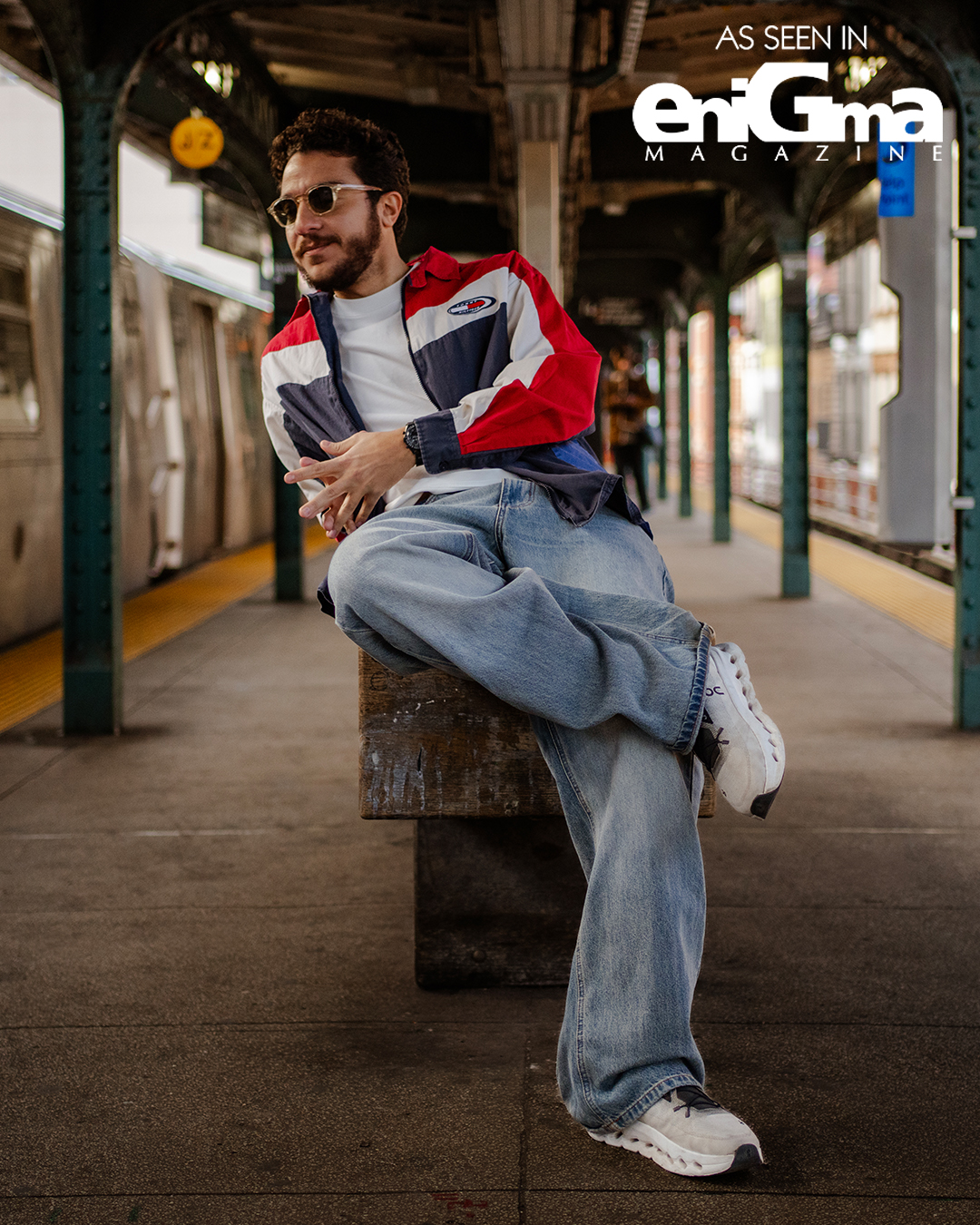
Even as a public figure, El Nabawy keeps certain parts of himself private, especially when it comes to romance. Asked about the most romantic thing he has done, he laughed so hard. “I’m not going to say, but I love grand gestures. I will not reveal too much,” he said, a hint of mischief in his voice. “But for example, I love sending flowers. I feel it’s very romantic.”
However, he doesn’t fall in love with an image: he falls in love with what could be. “It’s a great question to think about,” he says. “I fall for potential. I don’t settle. When I see it, I pursue it.” That philosophy shapes everything about the way he approaches relationships: no shortcuts, no surface-level impressions, only a patient curiosity for what lies beneath.
When asked what he would want love to say to him if it had a voice, El Nabawy responded with curiosity rather than certainity. “I’d want it to tell me what to do and how to receive it and how to let it move me,” he said. There is an openness in that answer, a willingness to let emotion guide him rather than dictate his choices. Even so, El Nabawy admits there are parts of himself he is still learning to share. “I try to be more honest and open. I am sometimes closed off emotionally, but I am trying to change that.”
And he has clear ideas about how men, in particular, could change. “When they feel grateful, they should show that,” he said. A small, simple truth, but one that he believes can make a difference in how people connect and feel seen.
Even for someone as composed him, El Nabawy admits that there are moments when he feels misunderstood. “Many times,” he said. “But I don’t try to correct it unless it’s someone I care deeply about. It happened before, maybe four years ago, but I usually wouldn’t impose on someone. If they need me to explain, I will, but I won’t force it.” There is a quiet restraint in his approach, a refusal to make others see him on his terms unless it truly matters.
The tension between expectation and freedom is a constant in his career. “Both,” he said when asked whether he feels more pressure or more liberty. “A lot of pressure, but a lot of freedom because our era allows it. But of course, without sabotaging my career.” Even in a world of cameras and schedules, he negotiates his choices carefully, balancing ambition with authenticity.
And yet, perception does not always match reality. “Maybe some people feel like I don’t feel stressed and it was all easy for me,” he said. “I can’t say that because I work hard and make an effort. People do not have to see that. The outcome is the most important thing in this industry.” It is a reminder that much of the work behind the screen, the discipline, the dedication, is invisible, leaving only the final performance for the world to judge.
Looking further ahead, he is equally thoughtful about the legacy he wants to leave behind. “When people remember me, I want them to feel hope that there are always room to grow and develop. If you can see it in your mind, you can also create it. I want people to dream, to feel connected,” he said, his voice filled with optimism. It is an ambition that goes beyond acting rooted in his belief that his work can inspire others.
Even with his eyes set on what’s ahead, El Nabawy stays grounded in the moment. Fresh from filming Kan Ya Makan (Once Upon a Time) in Luxor, he’s already juggling new projects. “There’s a Sony film called Goat, I’m the Middle East voice,” he says, before pausing. More is on the way, but for now, he lets the work speak for itself.
PHOTOGRAPHY: Hany Osman
STYLING: Fatmah Sherief