

What inspired you to become an architecture and interior designer?
Design has always been at the heart of my journey. From the beginning, I was drawn to the process itself—the challenges, the evolution of ideas, and the way creativity responds to human needs. Architecture fascinated me most because it reflects lived experience; it is an art form that people inhabit every day.
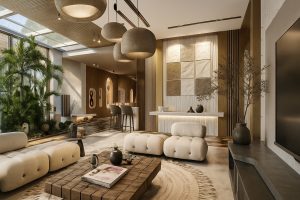
From a young age, I was captivated by how form, light, and material shape emotion. That passion naturally evolved into architecture and interior design, where art meets logic and imagination becomes structure. This fusion of intellect, creativity, and artistry is what inspired me to pursue a discipline where every project becomes a dialogue between function, beauty, and human feeling.
At KON-DESIGN, our identity is shaped by bold, innovative thinking. We thrive on solving complex design challenges, especially re-design projects where we re-imagine spaces thought to be complete. Often, the real challenge is not the solution itself, but helping clients see its potential—encouraging them to take a creative leap. That moment of transformation is what makes design truly exciting.
What do you consider to be your greatest strengths and weaknesses as a designer?
My greatest strength—and paradoxically my greatest weakness—lies in the essence of being a designer. The ability to reinterpret conventions and create original solutions drives me to constant research, experimentation, and refinement.
This relentless pursuit of originality demands time and intellectual energy that is not always visible to others, especially clients who may not see the depth behind each decision. For me, design is never repetition; it is a continuous process of renewal that mirrors artistic evolution and human thought.
How do you stay up to date with the latest trends and technologies?
Staying current is one of the most challenging aspects of design. Innovation moves at an overwhelming pace, and no one can absorb everything. I believe, however, that a true architect is not a trend follower but an innovator.
Rather than chasing every trend, I focus my research within the context of each project—exploring the technologies and methods that best bring an idea to life. This approach allows every project to become a platform for innovation and a meaningful contribution to the evolving dialogue between art, design, and human experience.
How do you approach a new project? What is your design process?
Every project begins with understanding the client—not only their needs and budget, but their identity, experiences, and artistic sensibility. Sometimes this means exploring their culture, travels, work, and passions.
From there, I build a narrative that translates into architectural language. For me, design is not about creating spaces—it is about creating meaning. Each project becomes a personal dialogue between the client’s world and the language of design.
Can you describe a challenging design project you have worked on?
Every project is a challenge in its own way, shaped by constraints of time, budget, and expectations—alongside my own pursuit of creative integrity. With over 870 projects completed, each one tells a different story.
What I have learned is that challenges are not obstacles but opportunities. Limitations push innovation, forcing new ways of thinking that result in solutions both creative and realistic.
What is your experience with different design styles and aesthetics?
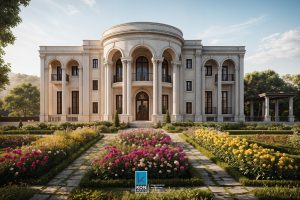
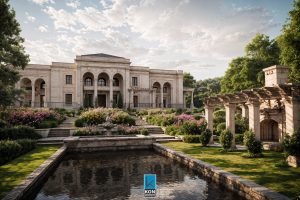
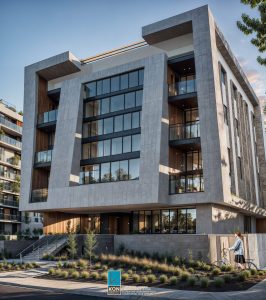
I do not approach styles as templates, but as living philosophies shaped by culture, emotion, and function. My role is not to imitate, but to reinterpret—to translate each aesthetic into a contemporary, meaningful spatial experience.
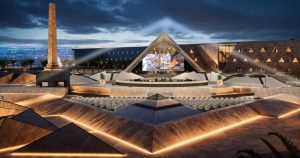
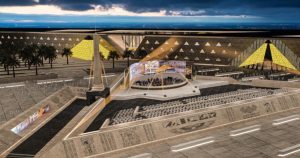
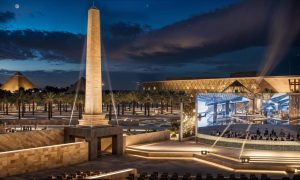
At KON-DESIGN, our multidisciplinary practice across architecture, interiors, and event design has trained us to understand space as both form and experience. This approach led us to contribute to landmark projects such as the Grand Egyptian Museum Opening Ceremony, as part of a wider design team under architect Mohamed Attia.
These experiences taught me that true mastery comes not from loyalty to a single style, but from the ability to move fluidly between design languages—crafting meaning through form, light, and emotion.
How do you balance creativity with functionality?
Creativity and functionality are not opposites; they are inseparable. A purely functional design lacks inspiration, while a purely creative one lacks longevity. The beauty lies in making function itself poetic.
Each project is a dialogue between imagination and reality. Balance is not compromise—it is an art that allows spaces to work effortlessly while still moving the soul.
What is your experience with building codes and regulations?
I see codes not as limitations, but as the framework within which creativity thrives—much like musical rules that allow infinite compositions. They exist to protect life and quality, and once embraced, they open unexpected design possibilities.
Some of my most innovative solutions emerged precisely because of regulatory constraints. For me, mastering codes is another layer of artistry where discipline and imagination coexist.
How do you collaborate with other professionals?
Architecture is a collective effort. My role is often that of a conductor—aligning engineers, contractors, and consultants toward a unified vision.
At KON-DESIGN, collaboration is dialogue, not hierarchy. Our experience extends beyond traditional architecture into events and large-scale ceremonies, including the Grand Egyptian Museum Opening and the Young Parliamentarians Conference in Sharm El-Sheikh.
Challenges arise, but they are opportunities to elevate the work. When engineering precision meets design poetry, vision becomes reality.
What software programs are you proficient in?
I work with AutoCAD, SketchUp, 3ds Max with Corona Renderer, and Photoshop, alongside freehand sketching. Each tool serves a different layer of thought—from concept to atmosphere.
What matters is not the software itself, but how it is orchestrated. The idea always leads; the tool follows.
How do you use technology to enhance your design process?
Technology is a creative partner. It allows ideas to be tested, refined, and experienced before they exist. From precise drawings to immersive visualizations and AI-enhanced workflows, technology amplifies creativity rather than replacing it.
Yet every project still begins with a hand-drawn line—where intuition leads before precision takes over.


Can you explain the concept of universal design?
At KON-DESIGN, universal design is embedded in our philosophy:
“Architecture is a universe, we build it.”
A universe must be inclusive. Universal design is not about compliance, but empathy—anticipating human needs so accessibility feels natural, invisible, and beautiful. It is about designing spaces that welcome everyone with dignity.
How do you ensure accessibility in your designs?
Accessibility is a mindset, not a checklist. From the first sketch, circulation, proportions, and sensory experience are designed to include, not adapt.
Through close collaboration with specialists, accessibility becomes seamless. An inclusive space elevates not only its users, but its humanity.
How do you handle tight deadlines and multiple projects?
Deadlines sharpen focus. At KON-DESIGN, structure, communication, and clarity of vision allow multiple projects to move forward without dilution.
Managing them is like conducting an orchestra—each project has its rhythm, yet all move toward harmony.


How do you deal with difficult clients or unexpected challenges?
Empathy is key. Every client carries fears and expectations, and my role is to guide—not confront. Challenges often spark the most original solutions.
Design is partnership. Through dialogue and conviction, obstacles become catalysts for stronger outcomes.
How do you maintain motivation during stressful times?
I return to purpose. A drawing becomes someone’s daily life, and that responsibility turns pressure into clarity.
I rely on rhythm, teamwork, and small victories. Constraints sharpen poetry, and stress becomes fuel when vision is protected.
Can you give an example of working with a diverse team?
One large-scale project brought together professionals from multiple disciplines and cultures. Initially, differences created friction—but once a shared narrative was established, diversity became strength.
My role was to listen, translate, and unify. Collaboration is not about agreement; it is about harnessing difference to create something richer than any single perspective.