
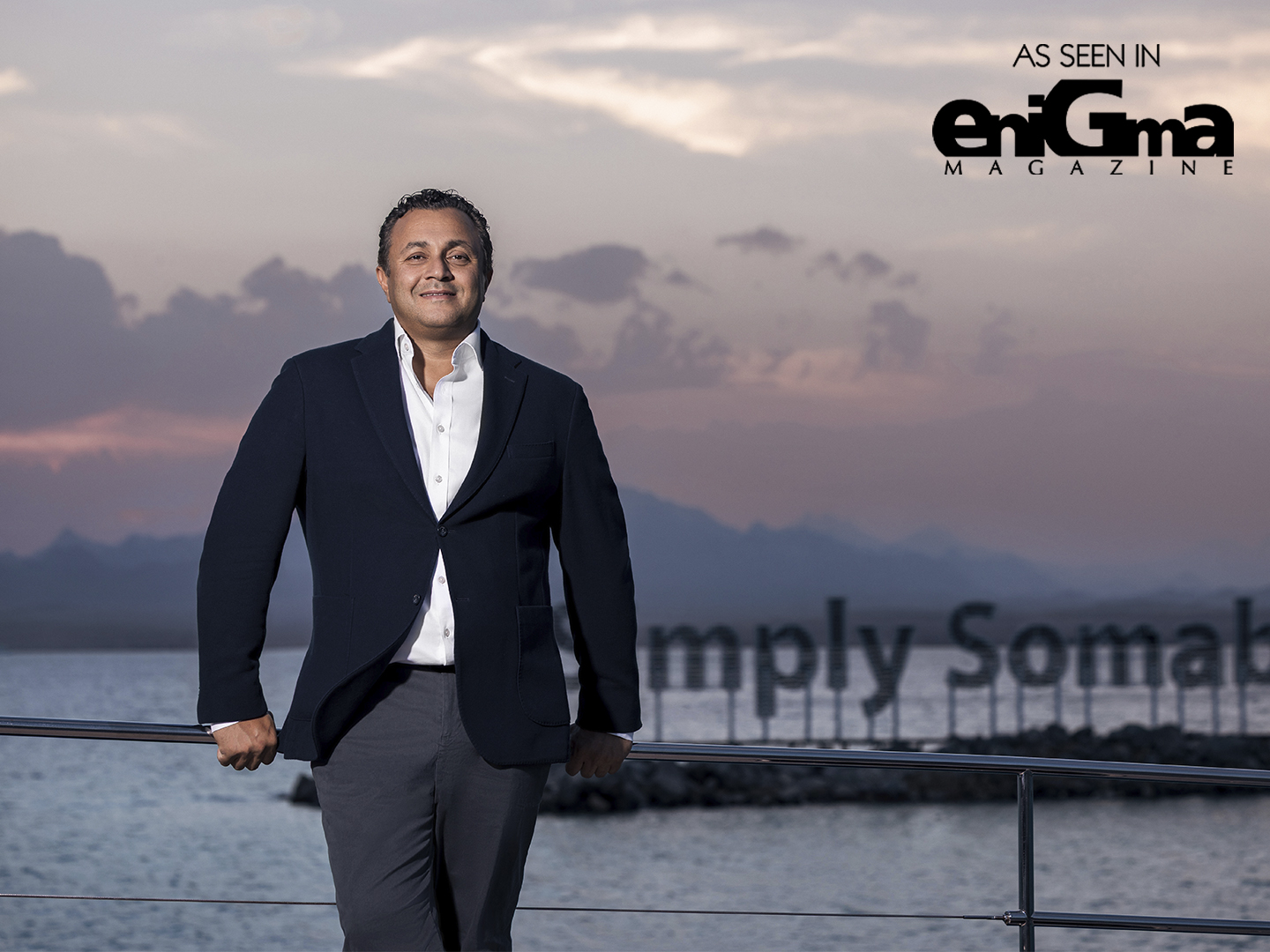
Some people find their calling early, and Ibrahim El Missiri is one of them. At fourteen, he was already studying engineering. At nineteen, he was working on a construction site as a day worker, too young to be given a contract, but already certain that he loved building things. His path since then has been anything but ordinary. He left engineering for a time to join a coral conservation project in the Philippines, then went to London on a scholarship to study the built environment, where he first discovered the idea of placemaking. He went on to work on some of the most ambitious projects in the world, including the Channel Tunnel, Doha Airport, Khalifa Port in Abu Dhabi and the master plan for Aqaba. Along the way, he learned that any problem can be solved with a clear scope, a plan and the discipline to follow it. Then he came home. Somabay, a remote stretch of the Red Sea coast, far from Cairo and inside a national park, asked him to bring together everything he had learned, from engineering to conservation to town planning. Today, it is a living community with schools, sports and thousands of livelihoods, and with a team that includes people who were never given the chance before. What stands out is how little of this he describes as a success story. He speaks of it as a responsibility to the place, to the people of Safaga and to the next generation. And he still dreams about travelling the world, about a travel show and about Antarctica. Enigma’s Omnia Zaied had the chance to chat with Ibrahim in Somabay to talk about business, adventure and everything in between. Here are some snippets of the interview…
I want to start by asking you: you studied engineering at AUC, and someone just told me that you were the youngest student there. How did that come about?
Yeah, it was a weird story. Suddenly, when I was in eighth grade, they just decided to cancel British education in Egypt, so I was stuck. So I just went, did my GCEs, passed and ended up in engineering.
How old were you then?
I was 14.
What made you choose engineering at the time?
Nothing in particular. I just liked building things. I liked putting things together. I’ve always liked playing with things like Lego, etc. That was my passion. I guess I followed it. That was an easy choice.
Is that why you did the built environment at UCL?
Well, UCL was a different twist. I was interested in doing construction economics and management, as opposed to just construction engineering, as I had earlier. And so at the School of the Built Environment is where I got introduced to the concept of placemaking, and I think this is sort of how it morphed into where I am today.
All right. So you weren’t able to work right after graduation because you were too young. What did you end up doing for a few years, when you were travelling around? Can you tell us a little about that?
I actually worked, but I worked as a day worker. So I still worked on construction sites. My first job was at Four Seasons Giza, and I worked there for four years. It’s just that I couldn’t have an employment contract.
How old were you then?
I was 19.
And when did you leave to do your thing, when you travelled around for a few years?
Well, after four years of working in engineering, I decided I’d had enough, and I wanted to change my career. I wanted to become – I was doing scuba diving at the time, and I was very, very interested in the setting up of the national parks of Egypt in the mid-1990s. It was part of an EU programme at the time, and I thought I was going to be a ranger. So I applied to study oceanography in Miami. I also applied to the British Council for funding to do coral conservation projects in different places, and I ended up in the Philippines, where I joined an organisation called CCC (Coral Cay Conservation). It was overseen by Sir David Bellamy at the time. It was a bit like Survivor, the programme, but pre-reality TV, and it was an incredible experience. I came back to Egypt, based on the grant I’d taken from the British government, to implement a similar model on the islands of Hurghada. But at the time, the authorities were not interested in that, so the Egyptian government declined the proposal. I went back to the British government and told them it wasn’t working, and they offered me a scholarship to go to the UK. That’s how I ended up in the built environment. The built environment was very interesting because it was just after the merger of Berlin. One of the key projects we were working on was actually the re-planning of Berlin to merge East and West. So it was very, very old and interesting.
Wow. But you wanted to come back. After getting that out of your system, in a way, you were happy to come back to this?
I was. And my first job, actually, what I focused on – I got hired again, back with the same company I had worked for, Bechtel. I worked on a project in Marsa Alam here, and the first project was Port Ghalib. I was handling the environmental aspect. I still had that passion, and I was working on finding techniques to dredge marinas while maintaining and protecting the corals in the area. And I think we did a good job then.
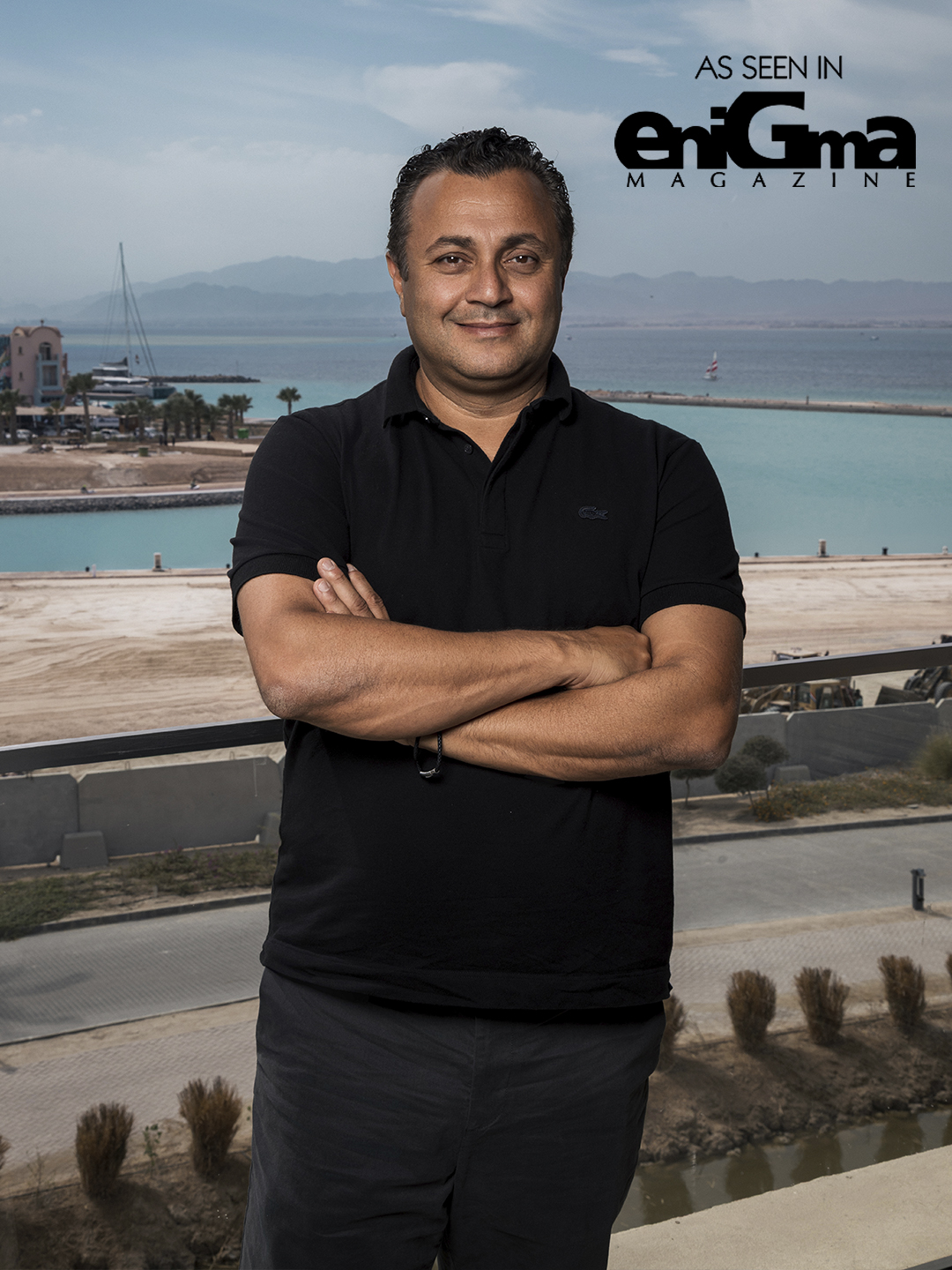
For 14 years, I think, you were abroad, between Doha, Dubai, London and so on. What did you bring back to Egypt with you from all these different experiences and countries?
Well, I was lucky enough that I was working on mega projects. Actually, not just mega projects; they were unique projects. I worked on the Channel Tunnel, which is commercially known as Eurostar. Okay, so that was very lucky. Right. I was on the first train that clocked 333 kilometres per hour. I was on that ride, and we had the screens. So I was super lucky. In that project, I learned about how there’s conservation of heritage and, at the same time, development in London. We were developing St Pancras, which was a disused station for a couple of hundred years. It was actually used, believe it or not, as a graveyard during the Second World War. So the first thing we did was exhume the bodies, then clean it out and convert it into the departure terminal of Eurostar. We worked on all sorts of things. When you have a high-speed train, there are historical buildings along the way that you can’t demolish, so I learned how they would take buildings apart and rebuild them. Actually, one of the weirdest things was that there was a very old pub, and we actually pushed it. That was the first time I saw that. So, very exciting.
Then I worked on Doha Airport, which was also very interesting because it was built in the sea, on a platform that we built in the sea, which was extremely exciting. It was a very challenging project. It consumed Doha at the time. It was probably maybe half the size of the city of Doha, and we were just building that in the water. That was very, very exciting. That was before The Palms of Dubai, in that era of mega dredging projects. Then, in the UAE, I worked in Abu Dhabi on a very unique project, the Khalifa Port. The question was: how do you take all those facilities and logistics out of the main island of Abu Dhabi and put them on the border between Abu Dhabi and Dubai? And then, in Aqaba, I worked on an assignment by the king to Bechtel to actually start doing the total master plan of Aqaba and develop it as a Red Sea destination for Jordan. They were always offbeat, non-traditional projects. And I think what I learned was that you can do anything in engineering as long as you have a methodology and a process of defining the scope and the target, putting in key elements, putting together a plan and working the plan, I believe. That is the simple way to do it.
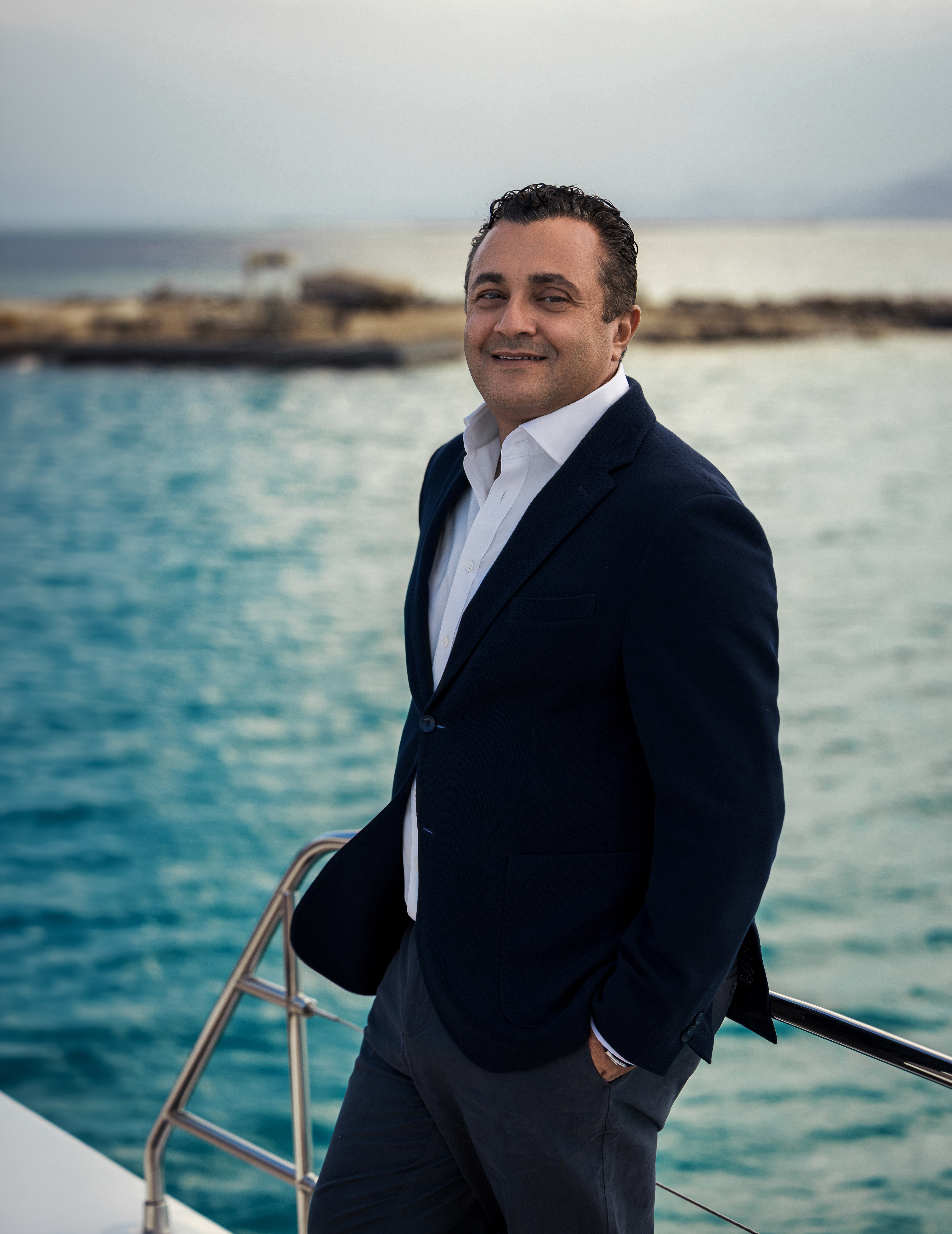
What did you do for your first job in Dubai?
Actually, it was my second.
What did you do first, before all of that?
Well, I left construction and joined Limitless, which was the international arm of Dubai World, to do development. That’s what got me into real estate development. That didn’t go really well, because I joined in June 2008 and then, in September 2008, the world collapsed. I then joined Madinet Nasr, which was at the time being privatised, so that was very interesting: getting an opportunity to work with a company that at the time owned more than 20 percent of the city of Cairo. It was a very exciting thing, and this is where I learned about real estate development, town planning, etc., in those two experiences. And then I landed at Somabay and worked as the development director for a couple of years. At the time, the project was still sort of stuck, and I actually left. Then I was offered the opportunity to come back and take the lead.
Okay, then you landed with Somabay, and it only took you two years to become CEO. How did that come about?
Well, before that, there was Madinet Nasr.
What made you come back? What did you see? I mean, back then, it was nothing close to what it is today, obviously, and it was not as well known. Did you have a vision of where we’re at today? It was a relatively new development; you know, you could have gone to a bigger development.
Yeah, I think it was a couple of things. First, it was, you know, sometimes you get opportunities in life, and I think you should just grab them. So suddenly this was a big step in my career: the offer, you know, to become CEO, take charge of this business, and fix it and grow it. It was a great challenge and a great opportunity, so I grabbed it. That was definitely a big aspect.
Second was that it takes me back to the origin of… I always had a vision of developing outside of Cairo. How do you put these things together? The only thing I had seen was something like Gouna, but I had certain ideas about this sort of town planning and the makeup of something that had all the different attributes I thought were missing. You know, so we were developing, actually, in a national park. There’s a big conservation element there, so you can tie that back to my stories with the environment. The hotels were there, the first five hotels. It was a new business for me, and I had to learn about tourism and hotels. But it was a very difficult time, yeah? In 2014, we were going through change in Egypt, so that was very challenging. And then it was about how you create a place that makes people come and visit and have a good time in Safaga, very far away from Cairo. I thought that was a challenge, and it connects to what I had studied. So it all came together; it’s like the perfect storm. And I just decided to jump in.
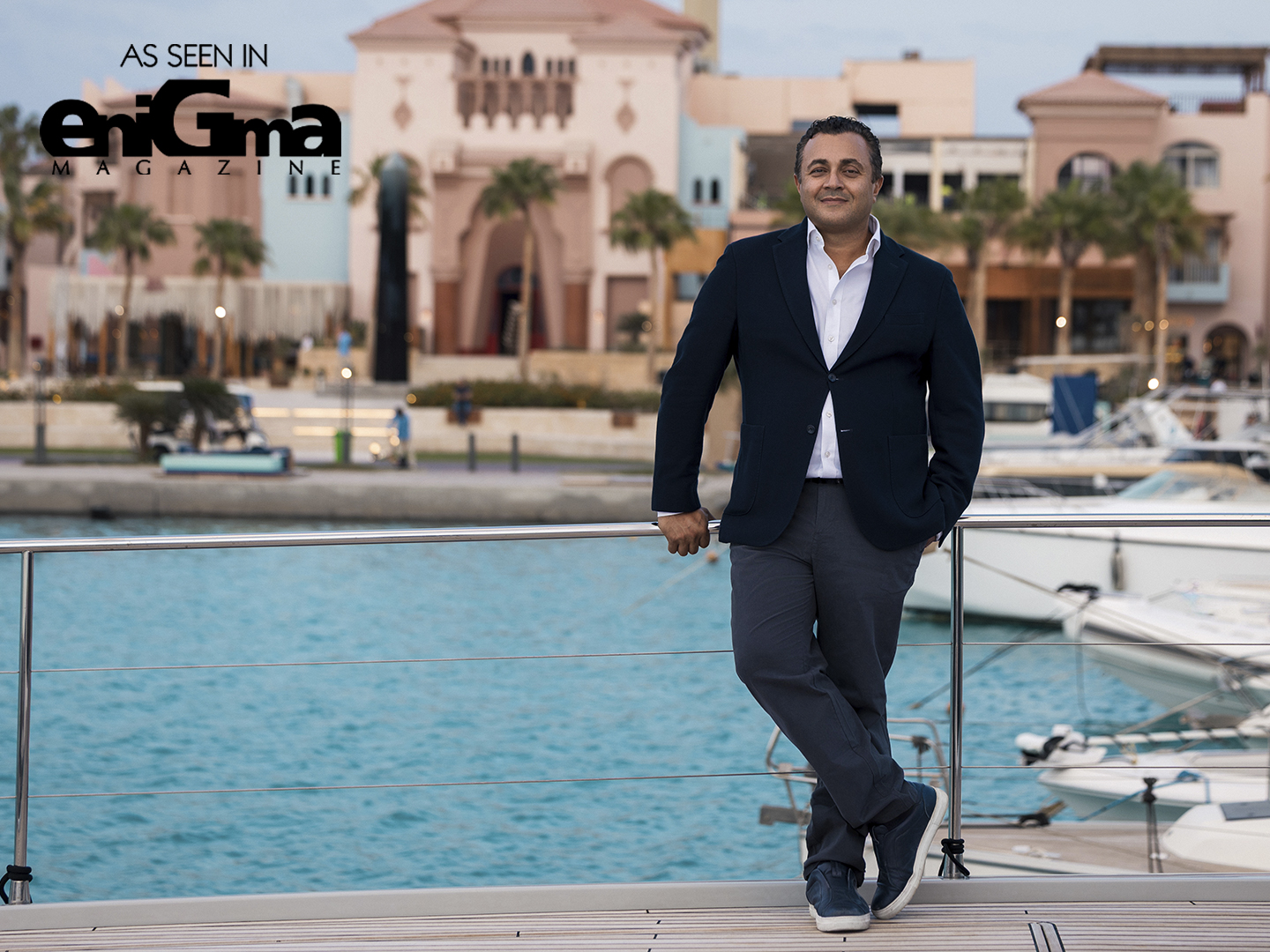
So, when you came on board, there were only five hotels. Were there any plans for this expansion?
At the time, there were obligations that we had to meet for the authorities: we had to complete the development of the land within a certain period. There were requirements. There were a few homes here and there, a few apartments, eight villas, things like that. There was a golf course, and there was the original boutique marina. And that was it. So, in a way, you had a blank canvas to start planning a town. We went through the works, the process. We hired the master planners, everything. And we started putting the pieces of the puzzle together to create a community.
People talk about it, but it’s easier said than done. I think a lot of real estate developers are just focusing on residential, so selling homes. I think now people understand that it’s not just about selling homes; it’s about destination building. And that’s a big word, and I think people use it in a very flimsy manner. They say “destination,” and it’s like, you build a mall, and you call it a destination. That’s not a destination. A destination is when you’re building a town with all its attributes: education, healthcare, housing, places to hang out, eat and have fun, points of attraction, all sorts of things. The staff are the main attributes. You actually have to build for them first, before even the users. All these attributes are key, and you just work at them one bit at a time, I guess.
Back then, did you imagine that it would be here today, with all that’s happening around us? All this expansion, with the life that exists in Somabay right now?
Well, look, it was designed that way. Yes, we designed it that way. We’ve always seen it, and we had a plan to do that. Now, did I think I would still be here, seeing it come together? There were challenging times, ups and downs. So, now and then, you think, “Okay, there’s this little bit that I’d like to see through.” And recently, there has been the marina expansion. It’s something we worked on 10 years ago, believe it or not. There were so many challenges, and finally we were able to make it happen.
That was planned from day one: having multiple golf courses, developing the educational sector and the sports element, and creating a sports hub. I remember talking about it and telling people, “People are going to come from all over the world to train and live.” And so, yes, I met the man in charge of the Australian national swimming team, and he said, “My word, you can’t imagine. If someone had told me I would be training in Egypt to go to a world championship, it would have been crazy.” So it happened. We saw what the Gulf did with sports, Aspire and Qatar, and what the UAE did. But I always thought they were dealing with the niche, and the niche is a very thin layer. The rest of the population is looking for proper facilities. Each bit, there’s an element, and you work on it. And I’ve got a great team who share the same values and the same vision, and we work together to get it to what it is.
What are the challenges?
I can’t say there’s one huge challenge. I think there are a lot of huge challenges, right? Regulations are a huge challenge. Time is a challenge. Financing is a very big challenge. But I have to say the biggest challenge is convincing people that you can actually create a society in the middle of nowhere, and that they would come down and have a home in a place like Safaga. I think that was a difficult sell. Sometimes I look at the old photographs from 10 or 15 years ago, and I think, “I can’t believe I was trying to sell that.” They must have thought I was ridiculous, right? But I had the passion, and I could really visualise it, so I was trying to be convincing. Initially, people I knew started to buy. I don’t know whether they actually saw what I saw or it was out of pity. But then I sort of felt, “Oops, I got pregnant. Now I have to deliver for all the people I know.” So I think that’s sort of how it rolled.
First, what are some of your favourite things or places in Somabay? For someone who has never been here, what would you say: “Okay, you have to see this in Somabay. You have to experience that”?
Wow, there’s a lot. Somabay is so diverse. Look, we have an 11-kilometre coastline. That’s big, okay? A typical developer with a similar plot of land would have one kilometre. We have 11 kilometres. Alexandria is 14, right? So we’ve got a lot of diversity. We’ve got stunning beaches, Sahel-like beaches. We’ve got a house reef. We’ve got windsurfing spots and kitesurfing spots. But my favourite is the side that it seems everybody sort of doesn’t prefer: the open seaside. Because we’re a peninsula, half of our coastline is on the bay, which is like a mega swimming pool, right? And the other half is on the open sea. I like that side. The terrain is carved by the wind and by the waves. The reef there is stunning.
We actually got the permit to build 12 jetties that give you access. You can walk in and dive in. I’d warn that you have to be quite advanced to do that, but it’s a stunning reef, with stunning marine life. It’s seven kilometres offshore, where you have this huge five-kilometre wall of coral reef, so you can imagine the biodiversity. That’s what I like. Personally, I don’t like stagnant seas. It’s nice to go swimming, but to me, I like to hear the waves. I like to feel the wind. We have turtle nesting grounds. We were walking today, and we saw ospreys perched on all the towers so that they can fish. Where do you get that in Egypt? You’re living within nature. You can see foxes running to their burrows on the coastline. You can see turtles. It’s really surreal, right? This is not normal for Egypt. It’s as if we’re living in Ras Mohammed National Park.
Definitely beautiful. How about life all year round? Part of making this a destination, a city, is having life all year round, with different facilities, such as hospitals and schools. How is that going here in Somabay? Who lives here?
Well, actually, it’s a year-round destination. Early on, it was probably about people who would use it as a holiday home, or people who were working from home. COVID was a game changer, right? COVID forced a work-from-home culture, with meetings online and everything we went through. We saw a surge in demand and a surge in people, even younger people, coming and staying. Of course, there are retirees who enjoy the golf courses. But we moved on. We’ve established a couple of schools. We started with Compass, the famous Compass School in Maadi, which adopts an alternative form of education. And then, more recently, we opened GEMS International School, Somabay, which has been a resounding success. We planned the school for 30 children. We got 120 in the first year. This year, we’re pushing to 300. And I’m like, “We didn’t design it for that.” You know?
So it’s one of those challenges. When you go to your investors and talk about business plans, they ask, “Where’s the market data?” You tell them the people are there, and they say, “Well, prove it.” But I think there is always, in development, an element of “build it, and they will come.” And that, to me, was very heartening: to see all those children from all walks of life, from Somabay, Hurghada, even Gouna and Safaga, all coming to our school here in Somabay. That is a game changer.
How many people live here full time?
Well, we have around 400 homes open all year round. So that’s probably, I don’t know, 1,500 to a couple of thousand homeowners. As for hotel guests, we get half a million guests a year, which is a lot. Plus, staff: we’ve got around 5,000 employees, give or take, in total. But the nice thing is that the city of Safaga, which is nearby – we did some mathematics, and we believe that probably 60 percent of the residents of Safaga, directly and indirectly, work for Somabay. So it’s had a huge economic impact on livelihoods in the region.
That’s really good. So, 35, almost 36 years of Somabay now: What are you most proud of?
What I am most proud of is showing how development can have a real impact. It is not just about building a beautiful place; it is about the wider economic and social impact. Safaga was one of Egypt’s poorest cities, and people now tell me, “Thank you for transforming our lives. We now have a business.” Seeing this impact, and major developers from the Gulf and Egypt gathering around Somabay, has been incredible. We have created the Red Sea’s first development hub, and the government has decided to replicate the model. I am also proud of the change in women’s employment. When I arrived 12 years ago, only one woman worked at Somabay. Today, women account for more than 20 percent of our workforce. Overcoming cultural barriers in a more conservative society was not easy, but we have built a thriving community. Our CSR initiatives are another source of pride. Cairo receives significant attention, but communities outside the capital need more support. Through projects such as Dialogue in the Dark, we have witnessed the enormous needs in Southern Egypt and the difference we can make.
Finally, the Sheraton team launched the first employment programme for little people, offering training and permanent hotel jobs in reception, kitchens, bars and restaurants. In a society where little people are often confined to comedic roles, this is unprecedented. We are helping change perceptions. We often talk about values, but creating meaningful change is difficult. Working far from major cities has allowed us to see our impact more clearly. Our football academy, for example, brings together children from Safaga and Cairo across multiple age groups, creating genuine social and economic change.
Obviously, there are so many things to be proud of, and it’s all amazing. But what keeps you motivated to keep on doing these things? And how do you keep your team motivated? How do you guide and lead them?
Well, look, what’s encouraging about all these things is their applicability to be achieved with a low budget. I think these are things that require mostly effort. When we did the Dialogue in the Dark project, where we got those convoys to do the eyesight checks and the surgeries for people, my staff were in tears. I wasn’t lucky enough to be there when the convoys came. But the look on people’s faces, when you’ve got those older people, kids and other family members, and the impact when you give them back their sight- the ones that you could give back their sight… I had staff who were, like, non-stop. I said, “You need to go back to work.” It’s as if they were all going to go and do charity.
I think there is a moral obligation. If anything, I look at the way development happens, say, in the UK, where I was educated and where I worked for nearly 10 years. Every development has certain obligations towards the development of housing for what they call key workers, and for different societal groups. You’re not going to change the entire society to be built for the rich. There has to be a balance, and I think that is very, very important. I just genuinely believe it’s a value system. One of the key things which my team believes in is that when we build housing for our labour, we will follow certain standards for labour housing. People need to have decent living conditions. We took note of the presidential programme of Karama, I think. These kinds of notions are very important, and you can instigate them. All you have to do is just pass them across.
Beautiful. What’s going on? What’s happening? We’ve heard of the Ramla Marakez development here. Can you tell us a little bit about that?
Well, Ramla is their Sahel development. Here, it’s called Shams. And yes, Marakez has joined us in co-developing a plot in Somabay. It’s an opportunity that we’ve been working on for a bit of time, and we were able, Alhamdulillah, to launch it. I think they did a great job with their development on the North Coast: the quality of their products, the community, the client base and the services that they provide. I think they had their first deliveries this year to huge public acclaim. Therefore, we thought they could be the right partners who would add to us. And we believe we’ve got a lot of those attributes, so there is alignment in our client base and our values. Accordingly, we partnered.
Where did the idea come from? So far, Somabay has just been Somabay. What made you think of doing something like that?
Well, I think at the end of the day, you can’t do everything yourself, right? You need partners in any business. And Somabay is 10 million square metres, while Ramla is a 300,000-square-metre development. So it’s important, but it’s not a huge part of Somabay. However, I think we are testing the concept, and we were very careful in the selection of the people we work with. And inshallah, things will go well.
Since you’re testing it, would you think you’d do it again with other developers? Are you open to the idea?
Well, I don’t know. I think I wouldn’t do it in a residential development. I’d probably do it more in hotel development, or if we’re developing a hospital or any other different projects. Yet, I think this was mainly because they really had great success with their project on the North Coast. And I’ve known Dasha Badrawi for many, many years, since his Sodic days. He’s got all that experience, too, and I think it sort of worked that way.
What else is new and exciting in Somabay?
Well, we’re opening our third golf course. So, really, a complete golfing destination: we’ve got two 18s and one 9. I don’t think anywhere else has 45 golf holes. That’s a fantastic development. We opened our sports hotel last year, Kactus, so we’re growing our sports arena with more sports. This year, we had the first grass tennis tournament, ATP- and WTA-accredited. The players who came to play in this tournament thought it was a typo. There’s no grass tennis in Africa, not just Egypt. So that was a shocker, as a pre-Wimbledon tournament. The lady who won the tournament in Somabay went on to the US Open, and she was really going. I think she was knocked out in round three by Sabalenka. And even at our tennis complex, we had a British guy who was playing, and he also went very far in the US Open. So we are starting to get world-class players to compete at our facilities, and we’re very happy with that.
We’ve got swimming, tennis, padel, and the biggest thing that’s coming up in December is Water Polo Month. We’ve got multiple tournaments for water polo of all ages. We’ve got Habawaba for the young ones, then Tomo, which we signed in Croatia recently, for teens. And then we are doing things with World Aquatics. So December is going to be crazy: all about water polo.
We’ve got equestrian sports. We did that with the Egypt Cup last March, and it was beautiful. I think the only other show-jumping tournament on a beach is in Miami. So, doing one in Somabay, people were stunned by the imagery. And we’re doing the Egypt International Cup for Somabay in December.
Plus, we’ve done the Narrative Summit, which is like a Mini-Davos kind of experience, with a who’s who on the list. Great speakers from all over the world and from Egypt are coming to exchange ideas and to talk about the new Egyptian narrative. This is the 10th anniversary, and it’s the third, I believe, the third or fourth time in Somabay. So that’s growing.
And the nice thing we always look at is that we don’t do one-offs. We want to do things that just keep on growing, and that you repeat year after year. We have a very busy calendar. And of course, from a real estate perspective, we’ve got two very exciting projects: our newly launched marina, in the works, whose designs are insane, which we’re launching, and the Anantara hotel and branded residences, which are going to be coming up, hopefully, by next year.
What else do you hope to see here?
I want one thing.
What?
A zipline. A really high zipline. I love ziplining. We contacted that company in Turkey, and we’ve got this huge water tank. I actually climbed the water tank. It was terrifying. So we’ve got this huge structure, and it would be one hell of a jump.
Are you going to do it?
If we build it – I don’t know if we’re going to build it, but if we can build it, yes, why not? Why not? It’s going to be fun. I think Somabay is the heart of what’s happening, the greater Somabay, with all those developers around us. And this is the crown jewel, right? So all sorts of things are going to happen.
Speaking of that, how do you see all these developers coming and altering the picture? How are things going to change for Somabay, given that competition, maybe, if you could call it that?
Yes, of course, it’s competition. But I think it also complements. I think the Emaar development is going to come with a totally different angle. We’ve seen what they’ve done in Sahel, so I think they’re going to do an amazing job. They’re one of the biggest developers on the planet.
We’ve got the Qataris. They’re talking. I’m reading that they’re going to make a move. We have Almaza, too, after what they’ve done. They’ve also come here. So we’re expecting more and more to come to the region. What that will do is drive the destination up. It will make it more exciting.
And we’re just waiting for the high-speed train. I keep thinking about the third line. From Sheikh Zayed to here, maybe three hours on a high-speed train. That would be amazing.
What do you see Somabay looking like in 2030?
Well, I think by 2030, the other developers will start springing up. It will be early days for them. I think Somabay will be pretty mature by then. I think it will be a thriving, growing town with a big community and lots of interesting things happening. But I think the journey of Somabay in its current form will be complete by 2032 or 2034, in that range. So it will be in the 90 percent complete range. And that’s exciting, because that’s when you enjoy it. Right now, there’s a lot of construction.
No, it’s beautiful. I mean, I’m enjoying it. It’s absolutely gorgeous. And every time I come, it’s bigger and better. So, Ibrahim, now that you’ve done so much… You’ve lived so many lives, as I was just telling you. When you look back, what would you do differently?
I don’t know. I would have loved to be an actor. Definitely, I would have loved to be a ranger in the parks. I think I would have enjoyed whatever I’m doing. I enjoyed being an engineer. I’m enjoying what I’m doing right now. I don’t think there is much that I would have changed. I think opportunities come along, and you take out of them what you want. Right?
What would you like to achieve? Do you look forward to becoming or achieving something in your lifetime?
I think I’d like to write a book. That would be fun. I’d like to… No, I’d like to do a travel show. That would be fantastic. I’d love to go back in time and do that, you know? Travel, do a programme, maybe work with you guys. I don’t think there’s anything more that you can do in development. If I want to stay in this field, what I’ve always dreamt of is to take one of the older towns on the Red Sea, like Qusir, and redevelop it. Or in Cairo, give me Zamalek, you know? And the authority to bring it back. I would do that.
But if that doesn’t happen, which most probably won’t, then I love travelling. I’ve got the travel bug. So, yes, a travel show.
Enigma Questionnaire:
Describe yourself in five words.
Persistent. Stubborn. Passionate. Committed. Adventurous.
What quality do you admire most in people?
Ethics.
What quality do you dislike most in people?
Lying.
If there were a book written about you, what would the title be?
I’d want it to be The Adventurer. But… I don’t know. Should it be The Builder? Bob the Builder. Literally.
Who would you like to play you in the film?
Brad Pitt or George Clooney.
What’s the best advice you’ve ever received?
My mentor once told me something I never for- get, and I always say it. He said, “Ibrahim, when you come to make a decision or do anything in life, if you think that you’re going to wake up in the morning and it’s going to be headline news, and you’re okay with it, then do it.”
What makes you laugh?
I love the old plays and things like that. I used to like all the thrillers and psychodramas, and I can’t take it anymore. I’ve got enough drama in my life. So I think I like comedy.
Which book has changed your life?
The Alchemist and Who Moved My Cheese? I like those two. I know a lot of people say it, but they’re really good. I think they’re just so straight to the point, and that’s it.
And film?
I like Keyser Söze in The Usual Suspects. But the one that inspired me is Suits. Suits is a good rep- resentation of corporate life. My God, I love Harvey Specter. I learned a lot from him. Some- times you need to be a Harvey. I’m serious.
What’s your favourite destination, or a destination on your bucket list?
I definitely want to go to Antarctica, Brazil, Con- go and Fiji.
Photography: Ahmed Mobarez