
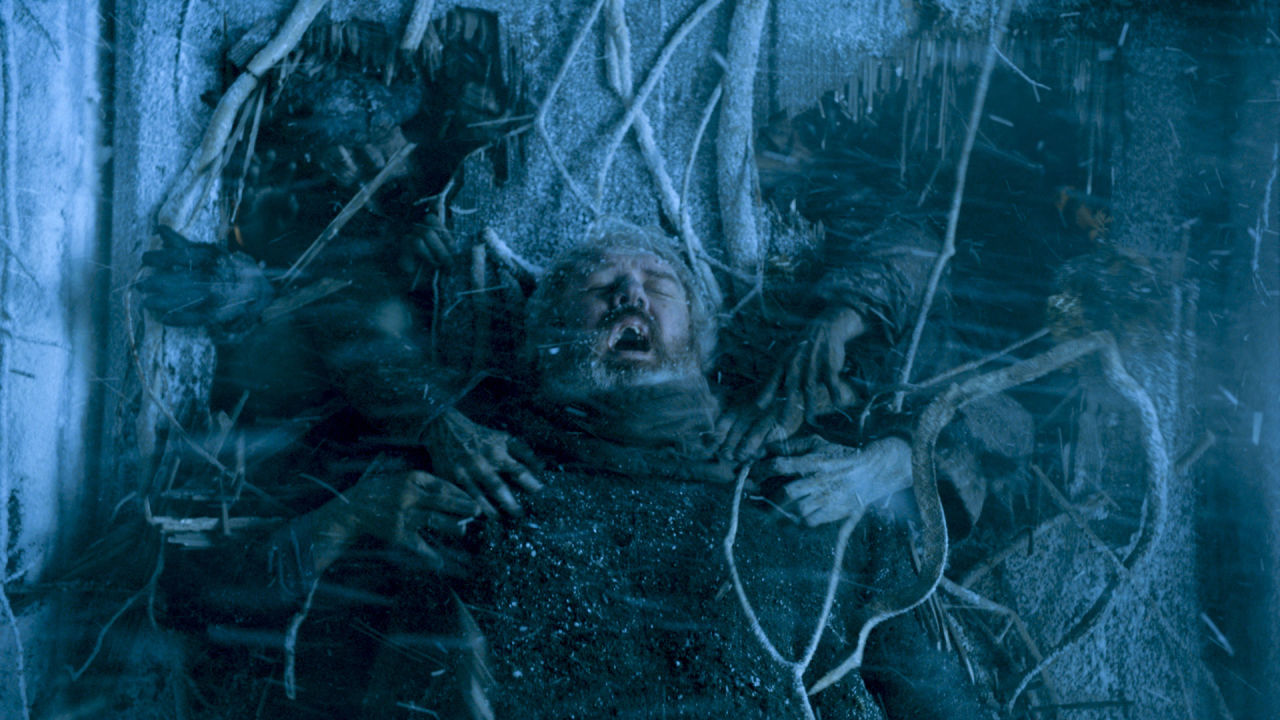
A different kind of beginning, a different type of narrative structuring is the best summary of everything that we’ve seen up to this point in Game of Thrones’ Sixth Season. Similar to what happened with Hodor, these changes to the show’s story-telling direction haven’t left us with much choice beyond holding the door against all the possibly undesirable outcomes that the show might have for us in the future. Put simply, intrigue sells. In fact, it is the only glue that’s currently holding up this season together. This week’s episode, fittingly entitled ‘The Door’, crystallized that fact, and presented us with the latest glimpse into the show’s future, without necessarily giving us the needed narrative clout to sustain its present.
In many ways, The Door continued this year’s apparent theme of having the biggest reveals again revolving around characters beyond the Wall. While Hodor’s apparent death was extremely touching and rightfully dominated airspaces as soon as the credits rolled, the most important takeaway from this week simply has to be uncovering the nature of how the white walkers came to exist. To find out that their creation was a direct byproduct of human behavior isn’t really a huge shock given that Thrones has continuously taken a stand on moral issues that we might not necessarily think about in our day to day lives, but are affecting us heavily nonetheless. In other words, showing that the mysterious “children” were behind the creation of the walkers was an unmistakable metaphor used by Thrones to show the negative burden that humans have on the environment, to the point that the environment “didn’t have a choice” but to start harming us back.
On a more positive note, we were once again reminded that the possible implications that Bran’s abilities will have on the show’s future are truly endless. Now that he’s replaced the Three Eyed Raven in his vague position, we are simply intrigued beyond words and can’t wait until we find out what the future holds for him, especially after losing both Hodor and his dire wolf during the white walker attack. Despite all of this palpable intrigue and the endless possibilities that lie ahead, though, we found ourselves again with a bitter taste in our mouths due to the apparent laziness in which the entire sequence was initiated in to begin with. To have such an important, drama-filled chapter simply started by the Night’s King mere touch of Bran was a piece of cheap narration to say the very least. Had the Three Eyed Raven planned all along for Bran to replace him at this time, as the episode certainly implied, then surely he could’ve chosen a safer wogging location, if you will, for them to appear in, rather than in front of the full white walker army. Once again, the show prioritized the result over the process. And once again, the sheer ferocity of the result ensured that it was a net positive. It won’t always be enough, though.
After all, sometimes no matter what you do, it’s always not going to be enough. That was certainly the case up in the Iron Islands, as Yara Greyjoy’s continued leadership and battle chops weren’t enough to earn her the Salt Throne, despite Theon’s courageous, ringing endorsement. In choosing Euron Greyjoy to become the next Lord of the Iron Islands, the Ironborn clearly illustrated that they value old fashioned, patriarchal strength more than righteous loyalty. Based on everything that we do know about the Ironborn, it seems evidently clear that they are very akin to the Dothrakis in the sense that both clans prefer perceived unadulterated power over moral and legal codes in their choice of leadership. For proof, one only needs to look at the Ironborn’s complete ignorance of Euron’s admitted murder of his brother and previous Lord of the islands, Balon, as well as their willingness to immediately go after Yara and Theon as soon as Euron was named as their new ruler. Notwithstanding, Euron’s proclaimed plan to unite the islands’ forces with Daenerys could be seen as the first supportive indication of how her long awaited homecoming may be perceived in Westeros. The support of a major house, with an enormous albeit currently fractured fleet, such as the Greyjoys could very well prove vital whenever Daenerys finally chooses to retake back the Iron Throne for the Targaryans.
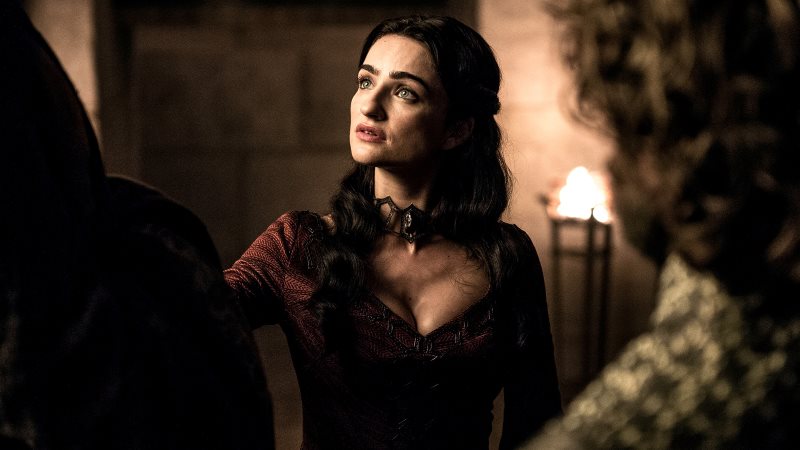
In these efforts, she will likely be aided by Kinvara, the mysterious red priestess that Tyrion summoned in his attempt to withhold the peace in Meereen during The Door. Indeed, her conversation with Tyrion and Varys indicated that she might be just as forceful and decisive as the Lady Melisandre has ever been. What’s interesting, though, is that the show has continuously decided to tease us about the identity of the Lord of Light’s supposed prince. First it was Stannis; then it was Jon. Now, the show is hinting that it might not be a prince at all, but rather a princess in the form of Daenerys. That could mean one of two things. Either this mythical character will have an enormous impact on the show’s endgame, or these proclamations are merely being used by Thrones to point towards the continued fallacies involved with fanatic, religious authorities. While the latter possibility is definitely more realistic and completely in tune with the show’s themes, you can never truly discard the earlier one given all the miracles that we’ve seen throughout the show, with Jon’s revival earlier this season the biggest example. Regardless, there are two red priestesses on our screens now, and for that, we are pretty grateful, for the night is dark and full of terrors throughout the realm.
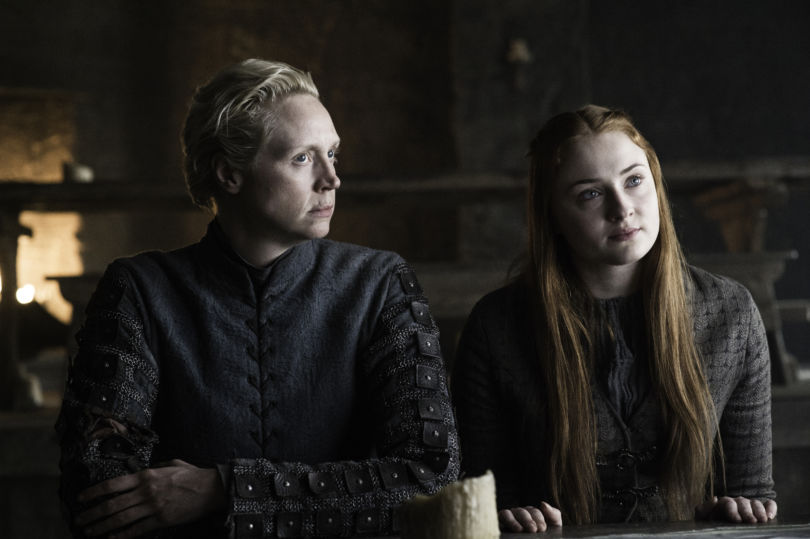
Over at the Wall, Jon still isn’t the same since his Lord of Light-inspired revival. However, everything that we’ve seen thus far this season is giving us an indication that Sansa might actually be the more important Stark in the planned conflict against Ramsay Bolton in Winterfell. In The Door, we were once again reminded of the power that Sansa still possesses due to her heritage. In specific, the Tullys of Riverrun have seemingly been awakened under the leadership of her great-uncle, Brynden “Blackfish” Tully. Their decision to unite with Sansa and Jon’s forces will likely provide a further winning boon to their attempted recapture of Winterfell from Ramsay. In these efforts, we’re willing to bet anything that Lord Baelish will be involved somehow and tilt its tides one way or another through his leadership of the fearsome Vale army. After all, Baelish is nothing if not persistent and single-minded. As such, Sansa’s decision to refuse his help won’t deter him in any way from intervening. We wonder, though, if her decision, one that she mysteriously kept from Jon, along with her decision to send Brienne away to communicate with the Blackfish might come back to haunt her. Similar mistakes have been fatally punished by Thrones in years past. One can only hope that Sansa won’t become the latest Stark victim due to these momentary lapses in judgment. Nevertheless, the odds aren’t exactly in her favor.
Looking ahead into the second half of Season Six, the show at this point has no choice but to begin answering many of its posed questions in earnest. Given all the hype that has been built up, doing so will be much easier said than done. The Door was the latest episode through which we were provided with tantalizing thrills, without having any definitive answers to any of these mysteries. While we probably lost Hodor this week, his death is actually likely to be among the more minor ones in what has been a particularly grim season, even by Thrones’ standards. We can try to hold the door all we like, but the results are still all the same. Winter is coming, and only death can pay for life. Valar Morghulis.
In one sentence: A patchy, filler-like episode that was lifted into an emotional tearjerker by Hodor’s touching death.
Episode score: 75%