

Few actresses have managed to sustain both relevance and intrigue quite like Dorra. Across a career spanning more than two decades, Dorra has built a reputation defined by versatility, poise, and an undeniable sense of self. From her breakout years in Tunisian television to becoming a fixture across Egyptian cinema and drama, she has continuously evolved with the industry whilst maintaining the distinct charm that first drew audiences to her. Off-screen, her influence has extended into fashion and public life, cementing her status as far more than just an actress. Yet beneath the glamour lies a performer deeply invested in growth, longevity, and the craft itself. Enigma’s Salma Owis sat down with the superstar to discuss transformation, staying relevant in a constantly shifting industry, and the personal and professional choices that continue to define her journey.
The shoot took place on one of the hottest days of the month, and with the heat came the usual exhaustion, tension, and inevitable inconveniences of a long day on set. Yet the moment Dorra arrived, the atmosphere noticeably shifted. She carried a calm, welcoming energy that instantly put everyone at ease, helping the team settle into the rhythm of the shoot despite the challenging conditions.
We were instantly struck by the beauty of Hyatt Centric Cairo West. With its colourful interiors, vibrant atmosphere, and fresh contemporary design, the space felt perfectly aligned with the vision we had for the shoot. In front of the camera, Dorra moved with effortless ease. Dressed in a series of carefully curated, vivid looks, she seemed to completely command the lobby, as though the space had been designed around her presence. Everywhere she went, heads turned, with passersby visibly captivated by her elegance and beauty.
As we sat down to talk, there was an immediate ease to Dorra’s presence. It felt less like an interview and more like chatting with a friend. We began by reflecting on her life before the spotlight. “I felt like I had two personalities,” she says. “One that was very shy and closed off, and another that appeared when I was in my comfort zone. With my group of friends, for example, I became completely myself and felt free to show that side of my personality.”
She went on to speak about her lifelong connection to the world of art, explaining that she had always been drawn to anything creative, whether theatre, dance, singing, or acting, essentially anything tied to performance. “I was the kind of girl who would stand in front of the mirror imitating actors and performers like Sherihan.”
Before entering the world of acting, Dorra also explored modelling and modern dance, experiences that further deepened her relationship with performance and self-expression. “These fields helped me a lot with expressing myself, because I’m not naturally the kind of person who knows how to communicate my emotions easily, so I used to lean on them as a form of expression,” she says.

We went on to discuss how her mindset has evolved over the years compared to when she was younger. “I used to dream big,” she says. “I believed everything was possible, and I was very confident in myself and my abilities, even though I was only just starting out. Entering this world was difficult, but I knew that if I believed in myself enough, I could make anything happen.”
She continued by reflecting on how much she once romanticised the acting industry, imagining it to be far more glamorous and effortless than it truly is. Once she immersed herself in it, she quickly realised there was another side to the profession. “At the time, I hadn’t seen the other side of this world,” she says. “I was only focused on the beautiful parts of it and couldn’t really see how difficult it could be.”
It eventually became clear to her that being a star, particularly an actress, also meant navigating the more difficult realities of the industry, whether that be public criticism, audience backlash, or the unpredictability of success, where some projects resonate deeply whilst others fall short. “I became more grounded and started seeing things for what they truly are, rather than through the eyes of the dreamer I once was,” she says. “I realised, not everything is within my control. Everything unfolds the way it is meant to, for a reason. All I can do is put in the work, and trust that the rest will follow naturally.”
All of these experiences seem to have played a significant role in shaping Dorra’s emotional intelligence and self-awareness over the years. As our conversation deepened, it became evident that her understanding of herself has evolved alongside the many highs and lows of her career. Navigating fame, public perception, and the emotional demands of performance has inevitably altered the way she views both, herself and the world around her. Yet despite the pressures that come with such visibility, there remains a sense of introspection in the way she speaks about personal growth. “I’ve always been mature. I feel like I was more emotionally intelligent when I was younger than I am now, because I didn’t have the pressure of thinking about people’s opinions,” she says. “But I would definitely say that now, I understand myself more.”
We then shifted towards Dorra’s beginnings in Tunisia and the differences she noticed between the Tunisian and Egyptian industries. She explained that the scale of production in Egypt is significantly larger than anywhere else in the Middle East, with Egyptian productions often reaching a much wider audience across the region. Despite that, she believes the essence of acting remains universal regardless where the work is created. “Acting is acting, no matter where it takes place,” she says. “Of course, you perform in a different language or dialect, but the stories being told are human and personal stories that you could find anywhere in the Middle East.”
When she eventually transitioned into the Egyptian industry, the experience felt entirely new to her in many ways. Still, it was not a world that felt completely unfamiliar. Having grown up watching Egyptian cinema and television, she already carried a sense of connection to the culture and storytelling long before stepping into the industry herself.
Speaking about the difference between theatrical performance and acting for cinema or television, Dorra explained that each medium requires a distinct set of skills in order to truly master it. “I started my acting career in theatre in Tunisia, and more recently I’ve also returned to the theatre world in Egypt,” she says. “Theatre is very different on many levels, especially in the way you perform. Everything has to be visible and immediate for the audience. There are no close-ups or reshoots, so you have to deliver everything in real time, using your whole body so that even those sitting far away can clearly feel and understand what’s happening on stage.”
“I feel like theatre acting is a school of its own. It teaches you so much about performance, and it is a very powerful medium in itself. Even seeing the audience’s reactions in real time affects the actor, sometimes in a positive way, and sometimes in a more stressful way.”
Talking about the risks she has taken in her life and throughout her journey into acting, Dorra reflects on how her path has been shaped by a series of bold transitions, both personal and professional. She explains that stepping into acting in itself carries an inherent sense of risk, but so does the broader act of constantly moving between countries, cultures, and identities in pursuit of growth.
After studying Law in Tunisia, Dorra took the risk of living alone for the first time by moving to Lebanon to get her Master’s Degree in Political Science. She then returned to Tunisia, where she ultimately made the decisive shift towards acting, choosing to pursue it fully and professionally, marking the true beginning of the career that would later define her. “Acting in itself is a risk,” she says. “But I would also say, moving from one country to another is a big risk too.”
“When I came to Egypt, it was a huge risk for me,” she continues. “I was constantly thinking I could make this big move and not succeed. It was a very difficult period. Leaving everything behind without any visible support was challenging in itself, and not knowing what to expect felt overwhelming at times. There were already many actors in the field from different parts of the Middle East, so it wasn’t easy to prove myself or build a strong name for myself in such a competitive environment.”
As she became more established in the industry and began to find success, her understanding of risk evolved significantly. For Dorra, risk is no longer about whether she will succeed or fail in the industry itself, but rather about the creative choices she makes within it. Today, she sees risk in taking on roles that feel far removed from her own personality, or in joining projects that audiences would not immediately expect from her. These choices, while uncertain, have become an essential part of her artistic growth. “I came to realise that all those experiences have an end, everything ends, whether in a good way or a bad way,” she says. “Overthinking is not worth it. I don’t overthink anymore, I like to challenge myself, and enjoy the experience.”
Enquiring about what makes a role worth her time and energy. Dorra explains that, for her, every role carries something meaningful within it, even if that value is not always immediately visible. However, she admits that it is often only with hindsight. Once a project is completed, she then has full awareness whether it was truly worth it or not.
“I would be lying if I say that every role I’ve ever worked on was worth it,” she extends. “I had to go through all of those experiences to reach a point where I now feel more certain about what is worth it for me and for my career. There are always things that are out of my control. It’s like a football team going into a match fully prepared but not knowing the outcome. It’s very similar to that. You prepare as much as you can, but in the end, the result is not in your hands.”
Regardless of the outcome of any project she has taken on, she says she never allows herself to view her choices through the lens of regret, as each experience inevitably carries its own lessons. For her, every role becomes part of a longer learning process, where mistakes are not setbacks but essential stepping stones towards growth and refinement. She explains that the industry is constantly evolving, and so is she within it, which makes reflection an important part of her journey. Rather than dwelling on what could have been done differently, she focuses on what each experience has taught her and how it can shape her future work.
We then talked about the types of roles she finds herself increasingly drawn to, particularly those that feel distant from her own personality, or even slightly intimidating in their complexity. She explains that this contrast is something she has come to embrace more consciously in recent years. “I think it is very evident in my most recent work in Ramadan in Ali Klay,” she says. “I took on a role that is completely different from my real-life personality and unlike anything I’ve done before. I’ve started to feel that whenever I choose roles that are far from who I am, they tend to stand out even more than the rest, like in Segn El Nesa (Women’s Prison), for example.”
She goes on to reflect specifically on her character, Mayada, in Ali Klay, which immediately drew her in because of its intensity and emotional darkness. “When I got the role of Mayada, I felt so drawn to her character and the project in general,” she says. “I felt it in the intensity of the character, how different she is from me, and how scary and challenging she is.” The moral complexity and darkness of Mayada felt far removed from Dorra’s own nature, as well as from many of the roles she had previously portrayed. It was precisely that discomfort, however, that made the role so appealing. The motivation came from a strong desire to challenge herself creatively, believing that a true actor should not remain within safe or familiar territory, but should instead take risks, push boundaries, and avoid repetition in order to keep evolving.
When discussing whether she incorporates aspects of her own personality into her roles, Dorra explains that she tends to fully transform into the character she is portraying, rather than blending her real self into the performance. While there are moments, particularly in emotionally demanding scenes, where she may draw on personal memories or lived experiences to access vulnerability, such as when a role requires her to cry, she largely approaches each character as a separate identity she steps into completely. For her, this level of immersion is essential to maintaining authenticity on screen. As a result, when watching her performances, she believes audiences are not seeing fragments of Dorra herself, but rather a fully different character who exists independently within the story world.
Actors, and public figures in general, inadvertently find themselves under constant scrutiny, with audiences often having opinions on everything from their careers to their personal choices. Dorra understands that this comes naturally with the profession, and over time, she has learned to make peace with that reality rather than allowing it to dictate her decisions. Instead of shaping her career around public expectations, she chose to focus on the kinds of roles that genuinely excite and challenge her creatively. “People already judge everything I do, even when I portray characters that are similar to my own self,” she says. “So I decided to take on roles that may seem scary and try something new, without really considering what people might think.”
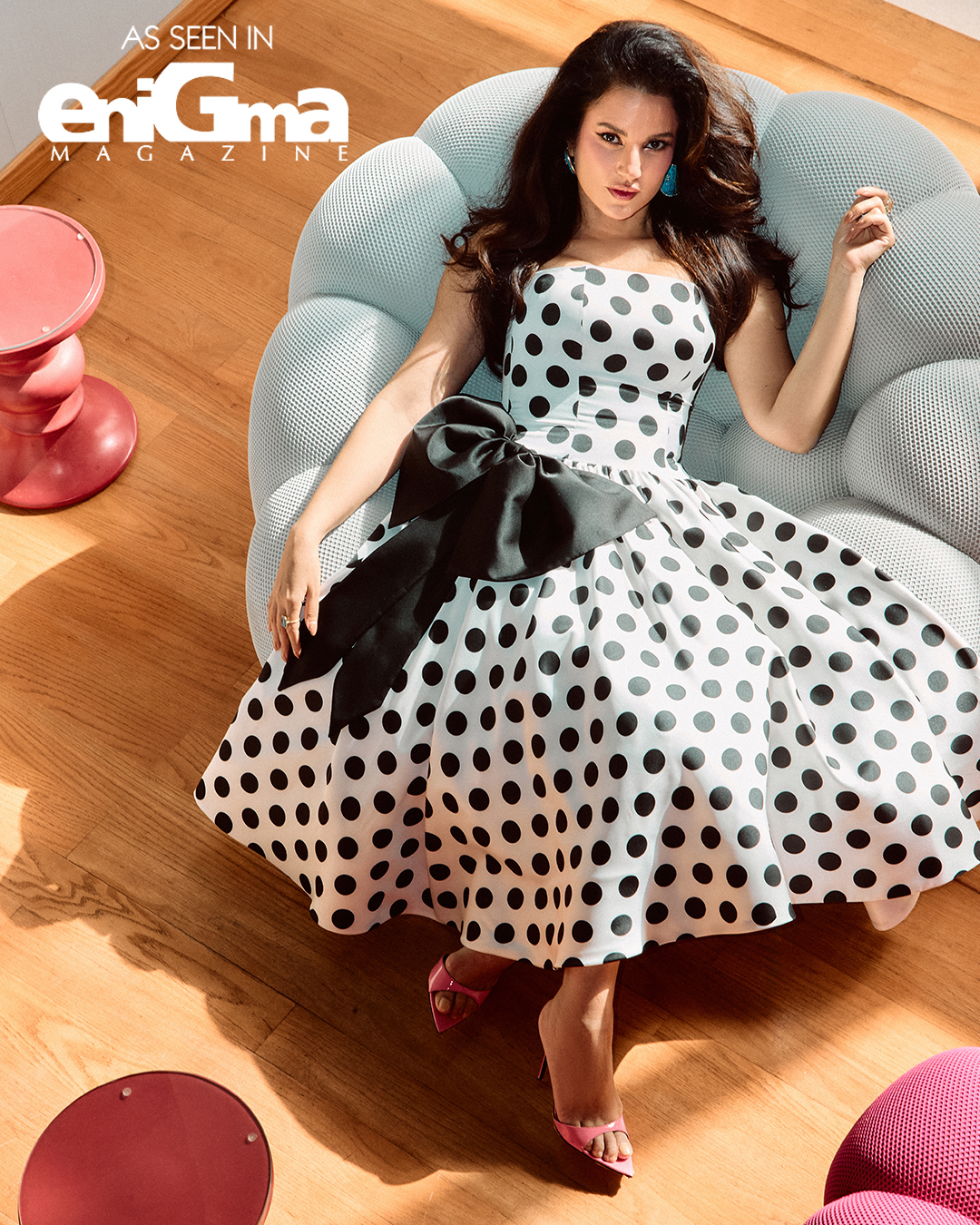
That mindset ultimately proved rewarding, particularly with the success and praise Dorra received for her role as Mayada in Ali Klay. The performance resonated strongly with audiences and revealed a completely different side of her as an actress. Still, she insists that external validation was never the reason behind choosing to take on the role in the first place. For her, the real fulfillment comes from artistic growth and the ability to continuously challenge herself rather than seeking approval from others. “I received a lot of positive feedback on my role as Mayada, but that’s not why I do any of this,” she says. “If I only thought about people’s opinions, stayed within my comfort zone, or only played characters that were similar to me, I would never truly grow or experience any real progress as an actress.”
She continues by reflecting on the nature of public opinion and how unpredictable it can be. She has come to understand that people often see what they want to see, regardless of the work itself. “I believe that whoever truly loves and admires you will find anything you create amazing,” she says. “And whoever doesn’t like you, no matter what you do, will still judge you and find a way to criticise you. They will pull you apart just to find any flaw.”
We drifted towards the emotional process of detaching from a role, particularly one as psychologically intense as her most recent character. She admits that stepping away from Mayada in Ali Klay was far from easy, especially given how emotionally consuming the character became during filming. “Mayada really drained me — she was such a difficult character to detach from,” she recalls. “She has a very complex and dark personality, and I am completely the opposite of that.”
She goes on to explain that Mayada’s mindset felt extremely far removed from the way she personally approaches life. “Mayada couldn’t accept that life was not going the way she wanted, she always felt the need to get revenge, whereas I’m completely different from that,” she says. “Whenever someone does something to hurt me, I usually choose to ignore it, sure I am affected by it, but I distance myself completely, and move on with my life.”
“I challenged myself to put myself in Mayada’s place,” she says. “Because as an actress, even if the character you are portraying is a terrible person, you still have to find a way to love them. You have to put yourself in their position, understand them, and find a way to empathise with them rather than judge or hate them. So whenever I had difficult scenes as Mayada, I would feel emotionally drained afterwards.”
The emotional intensity of carrying a character like Mayada for such an extended period eventually made Dorra realise just how deeply a role can seep into an actor’s everyday life. “I even found myself sometimes saying things or reacting in ways that felt like Mayada in my day-to-day life, which was unbelievable,” she recalls with a laugh. “Even sometimes when I would respond to my husband in a certain way, he would immediately say, ‘That’s Mayada speaking, not Dorra!’”
Those moments made her increasingly aware of how consuming the role had become, ultimately pushing her to consciously reconnect with herself once filming wrapped. After living inside such a dark emotional space for so long, she felt a strong need to return to the calmer, more grounded aspects of her own personality. “I had to go on a holiday and immerse myself in my own passions and interests in order to fully detach from Mayada and return to being Dorra again.”
When speaking about this stage of her career, Dorra explains that she feels she has reached a particularly fulfilling point in her life as an actress. With time and experience, she has found herself in a position where the range of characters she can portray has expanded significantly, giving her far more artistic freedom than before. She is no longer confined to a single type of role or image, but instead feels capable of moving fluidly between different generations, emotional experiences, and stages of womanhood.
She reflects on how she can now convincingly portray both a young, independent woman still discovering herself, as well as a more mature woman navigating marriage, motherhood, and the complexities that come with age and responsibility. That balance, she feels, has opened the door to richer and more layered storytelling opportunities. Rather than seeing age as something limiting within the industry, Dorra views it as something that has deepened her understanding of people, emotions, and performance, allowing her to approach characters with greater nuance, confidence, and emotional depth.
“My actual age has never really affected me,” she says. “I think what matters most is how I feel internally. I’ve never liked the idea of limiting myself because of age or forcing myself to feel a certain way just because a number says I should. Sometimes I look back at certain moments in my life and realise how much time has passed, and it genuinely surprises me.”
She speaks about aging with a sense of ease and acceptance rather than fear, viewing it less as a restriction and more as a natural evolution of self. For Dorra, growing older has not diminished her sense of identity or ambition, but instead strengthened her understanding of who she is now, both personally and professionally. There is a noticeable sense of freedom in the way she approaches this phase of her life, one rooted in self-awareness rather than pressure or expectation.
She also speaks candidly about the challenge of balancing her private life with the public image people constantly see. Living under public scrutiny has made her increasingly aware of how carefully public figures are observed, often leaving little room to simply exist freely or vulnerably. “Because of that, I feel like I usually try to present myself to people in a positive and composed way, even during moments when I may not genuinely feel that way internally,” she says. She believes audiences do not always fully understand the emotional pressures that come with being constantly visible, and that public figures are often judged quickly for showing anything outside of what people expect from them. As a result, maintaining that balance between authenticity and protecting her private emotions has become one of the more difficult aspects of her career.
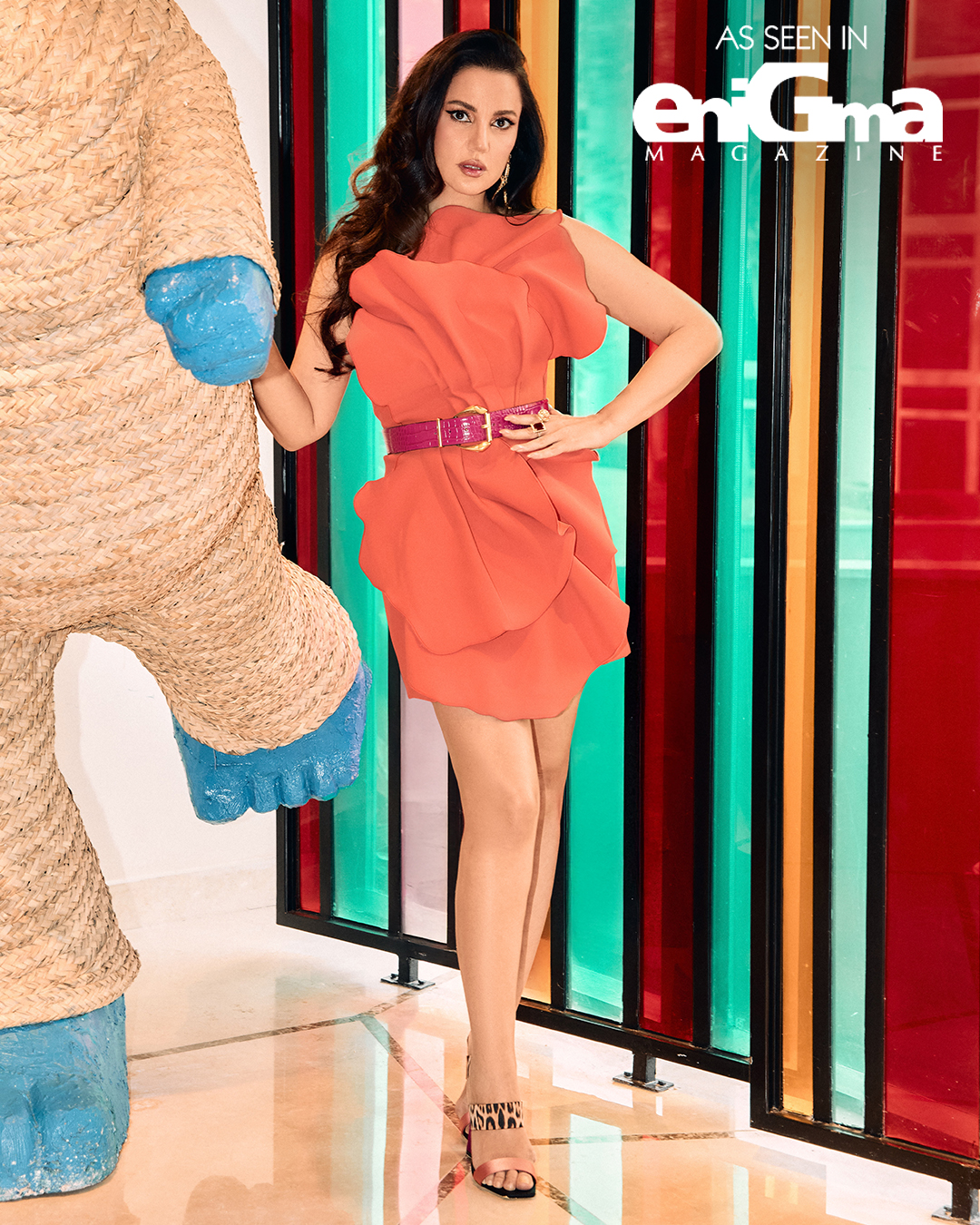
We later spoke about her understanding of femininity and how her relationship with it has evolved over the years. Dorra reflects on womanhood now with a far deeper sense of awareness, shaped by experience, emotional growth, and the many different phases of life she has lived through. “I feel like now, more than ever, I truly understand every part of being a woman,” she says. “I’ve gone through so many experiences and situations that have made me understand women on a much deeper level.”
She goes on to explain that there is a certain innocence that exists in the earlier stages of a woman’s life, when everything still feels new and unexplored. Over time, however, life experiences unavoidably reshape that understanding, creating a more layered and emotionally aware version of oneself. “At the beginning of a woman’s life, she is still pure in a way, still learning and discovering life,” she says. “But later on, a woman has lived through so much emotionally, mentally, and personally.”
That emotional maturity, she explains, has also strengthened her connection to other women and the stories they carry. She now finds herself relating far more deeply to the experiences, struggles, and emotions of the women around her. “Today, I resonate with women much more,” she adds. “Whenever I hear another woman’s story, I truly feel it and connect to it in a very profound way.”
“You have to love yourself, the way you feel, the way you look, every part of who you are,” she continues. “Even when you notice flaws within yourself, it shouldn’t take away from that love. You have to learn how to accept yourself fully and live through every stage of life while embracing all of it.”
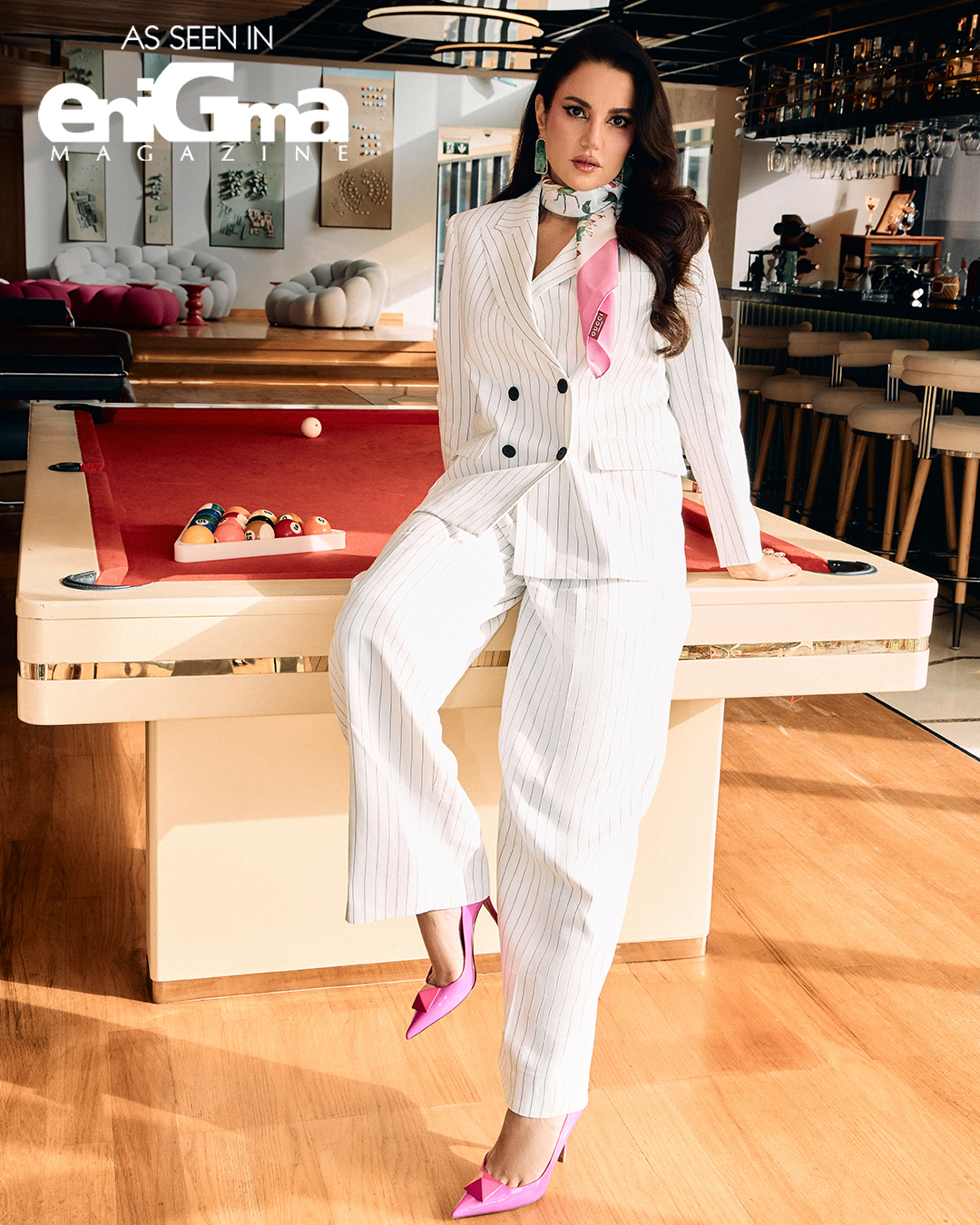
She speaks about self-acceptance not as something instantly achieved, but as an ongoing process that continues to evolve with time and experience. “I’ve realised that I am constantly learning new things about myself,” she adds. “I continue to grow throughout this journey of life, and I think that process never truly ends.”
When asked about the projects she is currently working on, Dorra revealed that she has been filming an off-season series titled Alb Shams (The Heart of the Sun). She describes the project as a refreshing shift in tone following the emotional intensity of Ali Klay, explaining that she was immediately drawn to the atmosphere surrounding the series and the energy of the team behind it. “My role in this project is softer, kinder, and much more enjoyable to portray.”
She also revealed that she will soon be returning to cinema through a new film titled W Yabka El Hob (And Love Stays), along with a strong cast. The film explores multiple love stories across different generations and age groups, offering a layered look at relationships, emotion, and human connection.
Dorra hopes to continue evolving within her career by taking on even bigger and more challenging roles that push her further as an actress. Despite the success she has achieved across television, she speaks with particular excitement about returning to cinema, a space she still feels deeply connected to artistically. For her, growth comes from constantly exploring new emotional territories and refusing to remain creatively comfortable, which is why she continues to seek projects that challenge both her abilities and her perspective as a performer.
Enigma Questionnaire:
Do you prefer taking part in comedy or drama projects?
The funny thing is that I actually enjoy comedy more, yet I somehow always end up taking part in more dramatic projects.
Which of your characters do people still call out to you on the streets?
Right now, definitely Mayada. But generally, everyone has a different favourite character.
What is your favourite place to travel to during the summer?
Anywhere with a beach. Whether it’s in Egypt, Tunisia, or Greece, for example. I also really love Spain.
When everything slows down away from the cameras, who is Dorra really?
A very simple person.
What is one item you cannot live without?
Unfortunately, my phone. We’ve all become so connected to our phones, and almost everything related to my daily life is on there, so I genuinely can’t go anywhere without it.
What does a perfect day look like for you?
It depends on whether I’m working or not. If I’m filming, a perfect day would be leaving the set feeling like I truly gave my all to something I love and feel passionate about, then go home and hopefully get the chance to spend some quality time with my husband if he’s not out for work. If I’m not working, then a perfect day would definitely include getting in a workout, because I usually struggle to find the time for that on busier days.
Location: Hyatt Centric Cairo West
Photography: Bilo Hussein
Styling: Maissa & Sahar Azab