

Few names resonate across the worlds of luxury, entrepreneurship, architecture and celebrity quite like Mohamed Hadid. The Palestinian-American entrepreneur has made his mark with his portfolio of opulent mansions and landmark hotels in the US and beyond, cementing his reputation as one of the most high-profile architects and real estate developers. Hadid was born in the Palestinian town of Nazareth. Yet, nine days later, following the Palestinian massacre known as the ‘Nakba’, his family was forced to flee Palestine, moving from Syria to Lebanon and then Tunisia. He eventually settled in America, where his journey of resilience, identity, ambition and success began.
Long before the global spotlight shone on his supermodel daughters, Gigi and Bella Hadid, Mohamed Hadid was already crafting a legacy of his own, designing architectural masterpieces that became synonymous with glamour and innovation. Yet behind the glossy image lies the remarkable story of a proud and determined Palestinian refugee who fought tirelessly to carve out a life far from his homeland and make his family proud. His journey was defined by vision, ingenuity, and perseverance, a life marked by daunting challenges and soaring triumphs. Yet what matters most to Hadid is his role as the devoted patriarch of a family he loves deeply and takes immense pride in.
On a warm evening at the Kimpton La Peer Hotel in West Hollywood, California, Hadid sat down with Enigma’s Founder and CEO, Yasmine Shihata, to reflect on his journey, spanning continents, cultures and generations. What followed was a candid conversation that revealed the man behind the legacy and the secrets to his success. Here are excerpts from Hadid’s truly inspiring story…
Mohamed, it’s such a pleasure to be interviewing you again…
I feel like I’ve known you for 30 years. I always thought, ‘this girl is so bright, so intelligent, and I couldn’t wait to get to know her more,’ and we did. I really appreciate the cover story we did years ago.
Yes, it was a great cover. Many people in our region admire you for your success story, as well as for your courage, the principles you stand for, your passion, and your reputation as a great father.
People say these things to me. But for me, it’s an obligation to fight for our freedom. This is simply normal for me. Since we were little kids, when we left Palestine, I was only nine days old, we became refugees, moving first to Syria, then Lebanon, then Tunisia, and later to America. We never had this hatred towards the people whom we brought into our home in Safed from Haifa two years prior. They threw us out, but when I was 15, I asked my father, ‘Would you do it again?’ He said, ‘Yes, I would.’ If you see someone get hit by a car on the street, you don’t stop to ask, ‘What’s your religion?’ You help them because they need you. We never carried hatred towards anyone.
Your father never made you feel like a refugee, even though you were refugees from the beginning of your life, right?
No. My father was a very well-educated man and never wanted us to feel bad or think less of ourselves. He wanted us to move forward and get an education. Of course, there were hard times, but I didn’t really feel them. I was only nine days old when my mother carried me away from Palestine. At that time, she had four children with her, and later she had four more in Syria and Lebanon. We lived our lives in a safe environment with my father and mother. In Tunisia, my father had a job with the Voice of America, and in 1964, we moved to America. We always felt loved by our parents and by those around us. My biggest challenge was learning Arabic. Every year, I would leave Tunisia and go to Idlib to learn Arabic.
At what age did you realise your history, since your parents didn’t speak much about it?
I always knew where my mother came from, and that she was never able to go back after we became refugees from Palestine. She had no right to return. I was born in Nazareth, and my great-grandfather, Zahir al-Umar al-Zaydani, was the ruler of the Galilee region in the 18th century, which was part of Palestine. The Israelis attempt to deny this history today. They say, ‘Oh, there was never an Arab ruler in the Arab world.’ That’s simply not true. They are trying to erase the autonomous rule of Zahir al-Umar in the 18th century. He was the sole ruler in the land of Galilee, which at that time was part of Bilad Al-Sham, encompassing modern-day Palestine, Lebanon and Jordan. He ruled over Haifa, Jaffa, Safed, and Nazareth, where his home was located. His children were rulers of other areas, including Tiberias and Khan Younis, among others. I still remember these names because my mother used to tell me about them.
My paternal grandfather was more of a religious figure from Safed. At that time, the best of one family would marry the best of another. My parents were a beautiful couple. They married in 1942 and had my sisters Ghada, Raida and Sanaa, and then I was the first boy. I was born in my mother’s house on the first of November. Nine days later, we became refugees when we returned to my father’s house in Safed. We found out that the same people we had taken into our home two and a half years earlier wouldn’t let us in. But my parents never wanted to talk to us about the struggles they went through, and never taught us to hate anyone. They just moved on. I found out that my father had come to Safed to open the doors for us before my mother arrived with my sister and me. But when he tried to enter our home in Safed, they closed the doors in his face and put him on a truck to Egypt, and we didn’t see each other for a year and a half. We ended up in refugee camps in Syria. My uncle, Ahmed Hadid, who was a doctor with UNESCO, eventually found my father and brought him to us in Syria.
So, your mother didn’t know where her husband was for a year and a half?
Yes, but my parents never spoke to us about it, because they didn’t want us to feel there was something negative in our past. They just wanted us to move on.
That’s a heavyweight for them to carry…
My father found work immediately at the University of Damascus, and later with the Voice of America. He was then transferred to Lebanon and Tunisia. At that time, we received Jordanian passports, but as refugees, I also had to carry my refugee card. I still carry it with me everyday because I feel a strong connection to it.
Who would have ever guessed that you started your life as a refugee…
My father was an intellectual man. He was a writer, editor, and translator — a true man of letters. In 1952, he was King Faisal’s translator at the United Nations. He was a powerful man, yet calm and respected. When we were in Tunisia, the Jordanian ambassador to Tunisia, Farhan Shubailat, became best friends with my father. He would come to our house, play backgammon and eat my mother’s cooking, as she was a fantastic cook. One day, while playing backgammon, my father asked, ‘What are we playing for?’ He replied, ‘If you win five games, you’ll come to the embassy and I’ll give passports to everyone.’ And he added, ‘And, if I win, I want Um Mohamed to cook a Palestinian dish for my family.’ My father won, and that’s how we got our first passports, through a game of backgammon.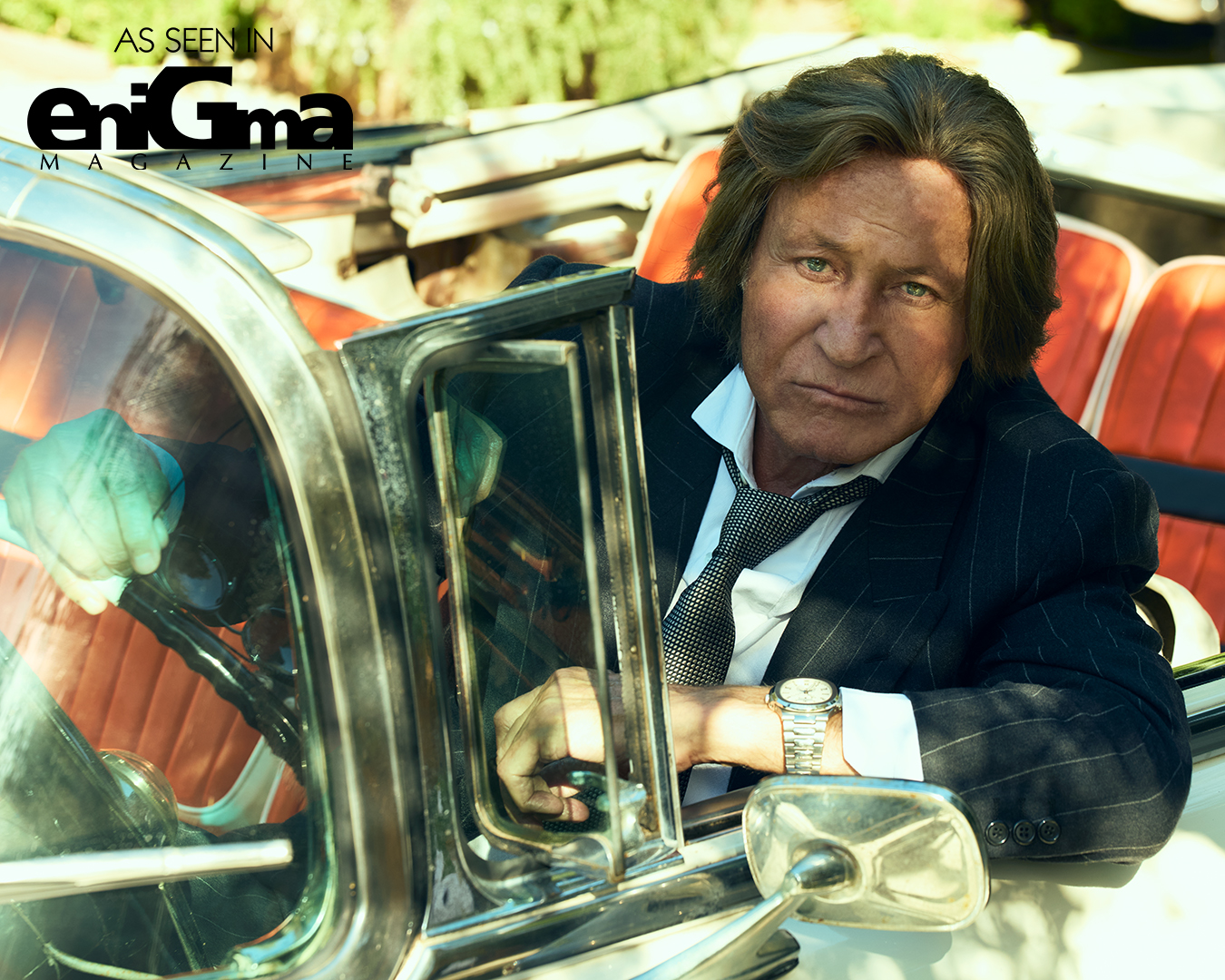
But later on, my father also got American citizenship because he was working for Voice of America, which was part of the United States Information Agency. That’s how all 11 of us eventually moved to the US.
How did this move to the US affect your life?
Our transfer to America was very smooth. I was fifteen when we moved and settled in Arlington, Virginia, in this lovely little house. I went straight to high school and played football. I barely spoke English, but I picked it up quickly. I received a scholarship to Duke University through football, but it was withdrawn.
Then I started looking through the newspapers and saw an ad: ‘White students needed at Shaw University — scholarship available.’ So, I said, ‘I’m going to drive there.’ I got in my car, drove to Raleigh, North Carolina, and couldn’t find it. I stopped at a fire department and asked, ‘Where’s Shaw University? And why are there bars and wires all around?’ The man said, ‘You’re looking at it.’ It looked like a jail! I walked in, and I was the only white guy there, but I didn’t care. We didn’t have this prejudice about people. They told me they needed at least one white student at the university to get federal funding, so I was that one guy. I was filling the quota. And from there, they allowed me to take classes at NC State, MIT and so on. I went in through the back door.
People ask me, ‘How did you manage to get your degree?’ The truth is, I didn’t manage anything. It just happened. Things kept falling into place.
Maybe being a refugee instilled in you the instinct to find solutions and always look for opportunities.
I never felt like a refugee, but perhaps yes. My father had four other daughters to put through school at the time, so I knew I had to fight for myself. We were three sons. Majid got a scholarship to the University of South Carolina, and everyone else was fairly settled. I was the one still running around, trying to make it on my own.
Where did you end up graduating from?
MIT.
Amazing. What a legacy! After MIT, the world must have felt like your oyster. What was your dream?
At that time, the Vietnam War was still going on. They were looking for more soldiers to send out, and my father was trying to find a way for me to escape that. He was reassigned to the island of Rhodes in Greece, and I received a significant opportunity from an American billionaire who wanted me to design his home after I won a competition among all the students in my class. I threw everything into the design, incorporating influences from Italy, Morocco and all the places I’d lived, resulting in a total mishmash that no one would dare to do today. But he loved it! And suddenly, he gave me a massive amount of money to make it a reality. With the money, I bought a house in Georgetown, bought my mother a car, and even a fur coat. That was my first real financial breakthrough.
And with that money, I got on a plane to Rhodes to join my father there. On the flight, I met two men — Michael Dix and Basilius Ladakis. Dix said he had a car dealership and restored classic cars, which I love. And that led to our friendship. When we arrived in Rhodes, we went to a nightclub called Step by Step. The line outside was miles long. We eventually got inside, but it was so crowded, smoky and overwhelming. I told them, ‘Look at all these people waiting outside — let’s open our own club.’ The very next day, I found a space, and we opened one. It became the largest club in Europe, both indoors and outdoors, and for five consecutive summers, it was the most successful on the island. After that, I spent about four months in Rhodes each summer. It was fun, and it paid well, too. That’s really where I found financial stability.
And during the rest of the year, did you go back to Washington?
Yes. In 1974–75, I began working for a structural engineering and architectural design firm. With the money I’d earned, I bought a large piece of property in Washington, D.C., and built my first residential building. Around the same time, I opened a car lot with Michael Dix, the friend I’d met on that flight to Rhodes. Together, we started importing classic cars into America. For me, it was the perfect blend of passion and business. Cars kept me energised and inspired outside of my daily architectural work.
It really sounds like you were a natural-born entrepreneur – driven by passion and instinct.
I’ve always found moments I could take advantage of. Many people don’t. Even if my work in architecture and engineering hadn’t succeeded, I was doing well with the cars, and I never stopped designing buildings on the side. Back then, architecture wasn’t exactly a big money-maker, so having both ventures gave me a sense of balance.
Yes, but you enjoyed it.
I loved it because I’m also an artist. Even before working, I was painting and selling my work to my mother’s friends. They would say, ‘Mohamed, we’ll take that one for $55.’ At twelve years old, that was a lot of money for me. By the time I was fifteen, it felt like a fortune.
So, did the love of art carry over into your architectural career?
Of course. My mind was always artistic. When I told my father I wanted to be an artist, he didn’t object. He was a kind man. He simply said, ‘Why don’t you pursue engineering alongside it?’ And that’s what I did. Engineering gave me the foundation to become an architect. My designs were mainly visual; I’d bring the ideas and then have them executed. Early on, I worked on numerous classic projects, in addition to completing a few modern buildings in Washington, D.C., and even some hotels. My cousin, Zaha Hadid, took the contemporary path entirely. It took her longer to establish herself, but her genius was undeniable.
Zaha Hadid is your cousin?
Yes, although she often said she was from Iraq. In fact, her father, also named Mohamed Hadid, was Palestinian, born in Nazareth, just like my own family. He was in the Ba’ath Party, and at that time, depending on which branch you joined, Syrian, Lebanese, or Iraqi, you’d be given a passport. Zaha was a true visionary. Her work was completely different from mine. I built for clients, whether in private homes or hotels, where I had to follow specific requirements, such as those of the Ritz-Carlton. There are entire books of specifications you must respect. My strength was blending old and new, taking a 16th- or 18th-century design and reinterpreting it in a modern way.
And that’s what you became known for.
Yes.
So, when did you move to Beverly Hills?
The market collapsed on me in 1990, and I lost almost everything. I came to Beverly Hills in 1991, thinking I’d take a couple of years off with the savings I had. In the late 1980s, I began skiing and aspired to compete in the 1992 Winter Olympics, which I achieved, representing the Jordanian team. I was the oldest competitor in speed skiing. I thought, ‘If I die, I die.’ I didn’t die, but I didn’t win either (he laughs).
So, for a few years, you became a professional athlete?
Yes. I stopped architecture entirely during that time. It was a rush. It kept me feeling young. I’m 77 now, but at the time I was 43, surrounded by 19-year-olds. To compete at that level, you either had to be completely crazy or incredibly strong.
And at that time, were you already married with children?
Yes, I was married to Mary, and we had two daughters, Marielle and Alana. But they stayed in Washington, D.C., while I began living in Los Angeles.
So after skiing, you decided to stay in California?
Yes. I began thinking, ‘How can I make money fast?’ Architecture and construction can take years, with a typical timeframe of four years for a single project. I needed quick capital. At the time, Los Angeles had no large luxury homes. A house of 11,000 square meters was a big house and a one of 15,000 square meters was considered a huge castle. But I saw money coming into the city, and I knew there was room to build bigger. So I got into the stock market. I started buying small companies that had good ideas but had run out of money: they just needed one more push. I’d invest $500,000 or $700,000, and if they went up, I’d sell. It was fast money. Today, you’d call it angel investing, but back then, I was just the guy people came to. I made a fortune, and with that money, I started repurchasing land and building.
So eventually, you came full circle and back to your passion.
Exactly. Architecture, design, and construction. I worked in Los Angeles, Aspen, Colorado, Mexico, and beyond. That became my next chapter.
And that new chapter shifted again when your then-wife was the star of a reality show.
Yes, Yolanda Hadid, Gigi and Bella’s mother, was a star on The Real Housewives of Beverly Hills.
By being on that show, you became a public figure, right?
Yes, but I was already a public figure in my industry. In 1979, I built the first hotel in Qatar, the Sheraton Doha, which was designed for a Californian company. They selected me because I was Arab and spoke Arabic language. When we first went there, it was nothing but desert. But I loved the people. For me, it wasn’t about money; it was about art, about putting my name out there and getting back to my passion.
You became a public figure, in addition to being a successful architect and real estate developer.
And then, of course, my kids, Gigi and Bella, became famous too.
How did that change your life?
It didn’t. It changed theirs, not mine. The girls are very business-oriented. Their mother, Yolanda, is a strong, beautiful, and nurturing woman who guided them to become the incredible young women they are today. I was always there in the background, reminding them that they had to make their own money, to stand on their own feet. And they did it on their own. They’re amazing, beautiful girls, and proud Palestinians.
Whether you planned it or not, you’re all public figures now, and people around the world listen to what you say. And you’ve chosen to use your voice in such a powerful and courageous way.
It’s natural. It comes from my parents. They instilled the Arabic language and culture in us. My kids grew up going to my mother’s house, eating Arabic food, and listening to her speak Arabic. We are Palestinians. I never claimed to be Jordanian, despite holding a Jordanian passport. I was grateful for the Jordanian passports, as they allowed us to travel, but we were always Palestinians. We always loved the idea that we are so special. To be a Palestinian, you must have a particular strength, a certain fire. My kids took that on as a flag, a badge of honour. That’s extraordinary and rare. There aren’t many of us, and we need to keep that identity alive. I always tell them: Being a Palestinian is like having a jewel no one else has.
And yet, in recent years, it’s become controversial to even identify as Palestinian. That must affect you and your family deeply.
Of course. Palestinians living in Israel often avoid saying they are Palestinian or Arab because of their Israeli passport. I don’t have that issue. I’ve always been Palestinian, and I want my children to be proud of that too. I never forced it on them, but they embraced it. They realised that being Palestinian is something very special. They chose to walk the runways proudly in Paris as the Palestinian Bella Hadid and the Palestinian Gigi Hadid. They could have said they were Dutch, but they didn’t. And it worked for them as it gave them an identity and a purpose bigger than themselves.
People in the West have this idea that Palestinians are Bedouins. In fact, Palestinians were always known for their education. Their biggest export in the 1930s, 1940s, and 1950s was education. They sent educators to Kuwait and Saudi Arabia. People also need to know the reality of what happened to the Palestinians. It’s often said that ‘700,000 Palestinians left on their own in 1948.’ No, we were evicted from our homes. And it was not just 700,000; it was at least 2.4 million people who were forced out because they had never registered the children. They would just count the father and mother, as well as those above 16 or 17 years old. However, it was between 2.4 and 2.8 million people who left Palestine. When my mother left, she had four kids who were not registered, just my mother and father.
It’s an essential part of history that, hopefully, people are now revisiting in light of recent events.
Yes, and people of Palestinian origin are starting to be open and say that they are Palestinian – more than ever before – and I’m happy they’re waking up now.
You have been very vocal for a long time; I’m sure you’ve faced many challenges for being outspoken.
It’s worth it.
Nobody’s been able to scare you, obviously.
No. When people see someone scared, they prey on him. I’m not afraid. I walk the walk and talk the talk. I don’t care if someone wants to kill me for that. I get a lot of hate. I walk down the street in Beverly Hills, and people call me names and accuse me of being anti-Semitic. I tell them, ‘We are the Semites. How can you call me anti-Semitic when I am a Semite?’ I challenge them, and I also try to educate them, because most of the time they don’t know what they’re talking about. Many of the people in the Zionist state aren’t Semites at all; they come from European countries. Having said that, some Jewish people are brilliant, kind, and well-versed in history, with a deep understanding of the truth.
Do you think that by using your platform, you’ve been able to change opinions and educate people about what’s going on?
Slowly, yes. I see people mentioning my name, such as the American political podcaster and author Candace Owens, who is familiar with my story and frequently brings it up on her platforms. My story is powerful: in 1946, we took in Jewish families, and in 1948, they kicked us out of our home. There are many families we know, like the Khoury family and the Sabbagh family, prominent families from Safed and Haifa, who suffered the same fate and were driven from their homes.
You’ve managed to use your platform in a profoundly positive way during such a tragic time by making the Palestinian cause personal. Were you affected financially?
My kids lost a lot of money. They lost some contracts, but they gained others. Most importantly, they gained the love of Palestinians, Arabs, and people who care about them. That made their lives easier. So, it’s not a big deal.
For me, I must stand with my people. Yet many came after me for not supporting my Jewish friends. Why can they take their position, but I can’t take mine? From then on, I began to feel the pressure on my business. But my business is fine. I don’t care. I don’t eat much. I’m always smiling. I thank God because my children are doing well. To me, integrity is more valuable than money. Money is not a currency for which I would ever sell my soul.
I’m proud to be who I am. I don’t care whether I eat shawarma or steak. To me, it’s the same. I used to throw a lot of parties in the past, but I no longer need them. I’ve done my partying.
You’re at a good stage in life.
I would love to see my country do well and return to normality. Hopefully, some peace will be established among us all.
Is there anything left on your bucket list other than Palestinian freedom and prosperity that you’d still like to do?
I designed a mosque in Virginia in 1990, but I never saw it because I buried my father the day after it was launched in 1991. I never went back to see it, but it turned out to be a very successful mosque. I’m hoping to build another one in Los Angeles for the community.
I called the one in Virginia, Dar Al Hijrah, which translates to “House of Refuge,” where anyone can come, regardless of their religion. If you want to pray to God, God is for everyone. I have an affinity for Islam. When I visit Egypt, I visit mosques and see many of the great sheikhs. I love praying, as it’s a fantastic feeling. That’s why, before I die, I’ll build another mosque here.
That’s great, but I’m not sure people know that you’re welcoming of all faiths. Being a proud Palestinian doesn’t mean you’re anti-Jewish.
Not at all. I have several great Jewish friends. They feel connected to a country that represents them, so they feel they must side with it. But I understand that.
Some of my best friends, whom I’ve known for 50 to 60 years, are Jewish. The fact is, we’re all the same. We come from the same area, from the land of all religions. I was born across the street from where Jesus was conceived, in Zahir al-Umar al-Zaydani’s palace. We took in Jewish refugees. We never had a problem with that, and I still don’t. I still love my Jewish friends. If they don’t love me back, that’s their choice.
But I think it’s important to make it clear that just because you have an issue with the Israeli government’s actions, it doesn’t mean you’re anti-Jewish.
Absolutely. My father always said, ‘Judaism is a religion. It’s not Zionism.’ Even in Washington, D.C., I had many Jewish friends. My mother would cook kosher food for them because I loved them. They were my friends. But now, you know, they’re teaching them to hate us, which is very sad.
When was the last time you visited Palestine?
I went back in my 50s. I visited my old house in Safed, where my parents used to live, and I couldn’t help but cry. I also went back to where I was born in Nazareth, as my uncles still own the home and the building. It overlooks the church that my great-grandfather rebuilt, where Jesus was conceived.
You carry the Palestinian flag in the most positive and beautiful way without being aggressive, and it’s making a huge difference. I hope you’re aware of that.
Thank you. At Enigma’s celebration in Beverly Hills, many people came to me and told me they were Palestinians. Many said, ‘You know, I am Palestinian. My father and mother are Palestinian.’ They hadn’t done that at events over the last four or five years. Suddenly, they take pride in being Palestinian. And I think everyone should be proud of who they are. People should be proud to be Egyptian, Palestinian, Lebanese, proud to be Arab. All these countries are one, really. We’re all good people. We should take great pride in who we are.
Well, that’s what our awards events are all about: celebrating Arab culture and success stories.
And you do, and people have changed their attitudes. Suddenly, they want to be Arabs. Suddenly, they want to eat Arabic food and proudly say they are Palestinian, Egyptian, or Jordanian. That makes me very happy.
Yes, you’re not just passionate about politics, you’re also proud of the Arabic culture. Your passion and dedication have made a difference, one that is bigger than you know. Even though you’ve built all these impressive developments, your most significant legacy is being a proud Palestinian who has courage and a powerful voice that future generations, such as your children and others, can follow.
I don’t need to be thanked for that. It’s our obligation to carry the flag and let people know who we are. We are from the land of Galilee. From Bilad Al-Sham to Egypt, we are all one.
Yeah, thank you for reminding us. Such a pleasure, thank you so much, Mohamed.
Thank you, Yasmine.