

As CEO of not one, but two global luxury goods businesses, Sungjoo Kim defied her traditional Asian parents to become one of the most powerful businesswomen in the world. In London, Enigma’s Aysem Monaco talks business, luxury and female empowerment with the irrepressible Ms. Kim.
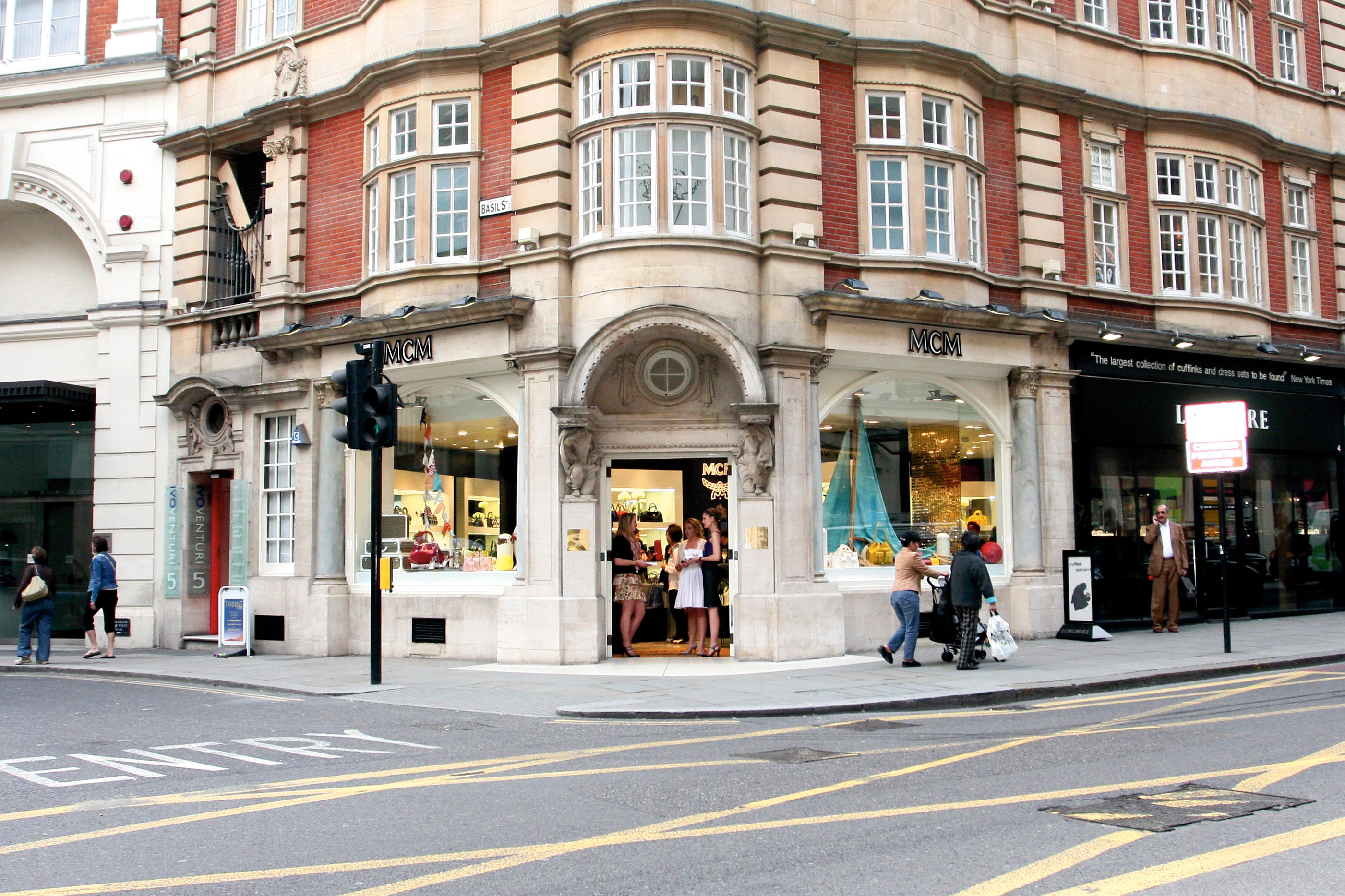
As Chairperson of the Sungjoo Group, a retail group operating franchise stores for Marks & Spencer, Yves Saint Laurent and Gucci in South Korea, and CEO of MCM Group, the German luxury goods company, Sungjoo Kim is an inspirational female entrepreneur for the 21st century. I meet her on a cold Monday evening in London. It is dark and oppressive outside but the moment I step into her newly opened MCM luxury accessories boutique on Sloane Street, I feel like I’ve stepped into a sumptuous and stylish boudoir; the white and light tones of the interiors contrasting dramatically with the winter hues outdoors. We meet in the basement – a somewhat misleading term, in light of the cosy and intimate surroundings – designed by Kelly Hoppen. Hoppen is of course one of the UK’s leading contemporary interior designers, and much like Kim, someone who personifies independence, elegance and a strong vision of who and where she wants to be in life.
Softly spoken, Kim is a formidable character and her personal history turns the ‘rags to riches’ paradigm defiantly on its head; but we’ll get back to that later. Her foray into the cut throat and grafting world of business is a testament to her steely determination, courage and strength, which led to the Wall Street Journal naming her among the ‘Top 50 Women to Watch’ and Asiaweek calling her one of the ‘seven most powerful women in Asia’. Add her posts as Financial Times Global Book Award judge, World Economic Forum member and frequent spokesperson at business summits, including the Global Agenda Council, and you soon realise Kim is not one to sit around pondering her cash flow. As she explains, “Running a business is not about pursuing my own self interest or gaining profit. It’s a manifestation of my devotion to encouraging and empowering women and sharing these resources. My company is more of a social enterprise which motivates me to be successful. We need to build more companies devoted to society.” It is particularly resonant that as I type these words, the world is in the throes of an economic recession; due in part to the greed and misjudgement of various financial CEOs. Perhaps it’s safe to say if all businesses followed the Kim ethic, the international financial markets would have been kept in check. It is no coincidence Harvard Business School is writing a business case study on the Sungjoo Group and has recently visited Kim’s HQ in Seoul, South Korea. “They were so curious as to how a small Asia-based company run by a woman could operate a global business,” Kim explains. It would appear the world has a lot to learn from Kim, both in business acumen and strength of conviction.
Kim was born in Taegu, South Korea, the youngest of four boys and three girls, to one of the wealthiest families in the country. As an energy tycoon, her father owned 25 companies that he later divided into three separate entities and bestowed onto her brothers (her youngest brother, Young-Chul Kim sadly died in an accident when he was only 18). The family’s strong Confucian culture meant Kim was expected to marry a nice husband, look pretty and iron his shirts. Kim, however, decided there was a bit more to life than that, “I insisted on studying abroad and rebelled against an arranged marriage. I thought to myself, you only live once; was I going to live in a big house, have lots of servants and be miserable? Or would I pursue my own life even if it was going to be tough? After all, there was no guarantee I would succeed.”
In an almost self-prophesising manner, there were times when life got very tough for Kim. After applying to Amherst College (one of the most exclusive colleges in the US) against her father’s will, she studied there and she counted Prince Albert of Monaco as one of her fellow pupils. Kim then studied at the London School of Economics and Harvard, defying the notion of female subservience in her own culture. After falling in love and marrying a fellow student in 1985, she was disowned by her family and it was only many years later, through a business encounter, she would come face to face with her father again. On being disowned from her family, she was left penniless and ended up getting a job at Bloomingdales in New York, starting from the bottom in the warehouses and working tirelessly for several years. Meanwhile in South Korea, her brothers “had thousands of people worshipping them in big corporate offices”. Her big break came when the legendary Martin Traub, Chairman of Bloomingdales, appointed her as Project Manager and the rest, as they say, is history. Thanks to the “amazing experience” as Traub’s protégé, Kim created her luxury business in South Korea, owning the franchise for Marks & Spencer throughout the whole of the country, Gucci and MCM; spanning 100 stores with 500 people working for her.

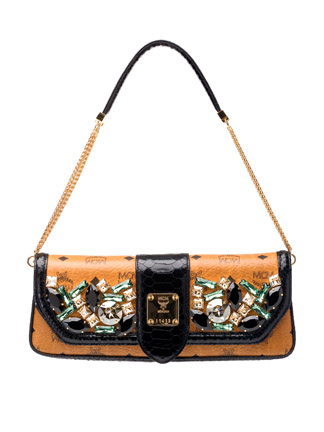
It would seem she endured a labour of love with MCM, less of a corporate giant than M&S and Gucci and now firmly established in the luxury marketplace thanks to Kim’s focused strategy. After acquiring the brand in 2005, she closed down many of the dated MCM boutiques, hired the former Creative Director of the Adidas Group as well as a talented Art Director and set about rejuvenating the brand through clever marketing. The brand, with its exquisite leather goods and bags, now attracts an international clientele who she defines as “21st century globally mobile men and women, not just high class people”. Fashion for Kim is clearly not just about “looking pretty” but being functional and fulfilling a purpose. As she says, “When you go to intense business meetings, you need a small suitcase!”
Three years after acquiring the brand, MCM is sold in more than 35 countries with 78 stores worldwide; predominantly in Asia. By the time you read this, more new stores will have opened at the Plaza Hotel in New York, in Dusseldorf and in Athens. As for the Middle East, Kim enthuses that she “would love to open a store in Cairo”, having attended the Global Summit of Women Conference hosted by Suzanne Mubarak two years ago with 1,000 women from 85 countries. And Kim seems to share an affinity with the Arab world and recounts how she assisted at the Arab International Women’s Federation where she was their guest Asian speaker and was struck at how intelligent, open-minded and charitable her fellow guests were. It is clear charity is an issue close to Ms. Kim’s heart, as she donated 10% of her company’s net profit and 30% of her personal annual income to charity. “That’s what gives me real joy,” she says. “Not buying a Ferrari or a big diamond ring.”
Most recently, Ms. Kim collaborated with Prince Azzim of Brunei to create pieces for the MCM range titled the ‘Prince Azzim Collection’. An auction will be held for the collection in December 2008 where all proceeds will go to the Prince Azzim Foundation. Like Kim, Prince Azzim “has the good intention to try and help the world” and in him she has found a kindred spirit. She also describes him as having the “most beautiful heart”. The same can most certainly be said of Kim.