

Legendary director Quentin Tarantino calls it his masterpiece… a “love letter to cinema” in which he attempts to rewrite history. Inglourious Basterds, Hollywood’s first ever movie where revenge is taken on the Nazi’s, has critics all worked up. Enigma’s Editor-in-Chief Yasmine Shihata was granted an exclusive sit-down in London with the controversial director himself as well as the film’s producer Lawrence Bender and luscious leading lady Diane Kruger. Read on for an incredible insight into the most hotly anticipated Hollywood movie in years…
When Quentin Tarantino makes a movie, it’s not just a movie but an event. Like Scorsese or Spielberg, the maverick director with a string of quirky hits – think Reservoir Dogs, Pulp Fiction and Kill Bill – has become one of those rarefied few, instantly identifiable by his second name alone. If it’s a Tarantino film, you know what to expect – razor-sharp dialogue, cutting-edge visuals and plenty of cartoon-style violence, all thrown together with the director’s trademark flair.
Tarantino’s latest film, Inglourious Basterds, is no exception. With superstar Brad Pitt and hot German model / actress Diane Kruger in the mix, it was the most eagerly awaited film of the year. Set during World War II, Basterds follows a typically Tarantino-esque reading of history where a group of renegade Jewish-American soldiers – led by Pitt – create havoc in the Third Reich by slaughtering and scalping prominent Nazis.
Extravagant, bold and downright outrageous in parts, Basterds may be Tarantino’s first war film, but put aside your preconceptions – it’s unlike any war film you’ve seen before…
Quentin Tarantino

His name has become synonymous with cutting-edge cool and his films have launched a thousand imitators. Not bad for a high-school drop out who once worked in a video rental store in California. Here, Tarantino reveals why Basterds was ten years in the making, why he never wants to make “old-men movies” and just what ‘exuberance’ means to him…
How was the premiere for the movie?
Oh God, it was overwhelming! The U.K premiere was the first time I saw a final cut of the movie with a full and impartial audience, and it was received really well. There was laughter and a kind of ‘wow, this is really entertaining’ reaction.
Was showing Hitler getting punished by Jews an objective for you in this movie?
It wasn’t a journey or a destination I had. I did plan on having the resistance against the Nazis in the movie, but the whole Hitler scenario wasn’t in the cards until I got up against it and it kind of started developing. Some people said this makes the movie a fairytale, or some sort of World War fantasia. If you want to look at it that way, that’s fine; the idea works that way too. But that’s not where I am coming from on it. Where I am coming from is that my characters change the course of the war. That didn’t happen because my characters didn’t exist, yet had they existed, everything that happened is quite possible. One of my themes is that cinema can save the world… in this movie Nitrate 35 mm film is destroying the Third Reich!
What about this concept of revenge? Is that an ongoing theme for you?
It’s funny; normally I deflect that question because revenge is just a stable genre in movies and literature. But WWII doesn’t really deal with revenge, not in a personal kind of way. But I do think that one of the intriguing and exciting elements, and one of the things that made me want to tell the story, was the concept of Jewish revenge.
The screenplay was over 600 pages long… tell us about the process of creating that.
I came up with the idea back in 1998. I had the idea of the Basterds but it was a different story, and that story just got to be too big. Back in 1998 it would have been my first original since Pulp Fiction. I ended up with the opposite of writer’s block, I couldn’t stop writing! I couldn’t shut my brain off and I kept writing more and more. And so it wasn’t a movie. So I put it away and when I went back to it in 2008 I came up with a whole different story.
What was it about the idea of Inglourious Basterds that made you hold on to it for 10 years?
It’s a good story and I got invested in these characters; I didn’t want to let them go. The opening sequences and the first two chapters were just too good. It was one of the best opening scenes I’ve written, only comparable to my first script True Romance. So when I wrote that opening, I knew I couldn’t just let it go. I considered it, saying that was then and this is now but then I knew that wasn’t correct; I’d be haunted by it. I didn’t think I could move on to something else until I at least got it out of the way. Even if I wrote it and didn’t have any intention of making it, it was a mountain I had to climb before I could see the horizon and other mountains.
How important is it for you to create a cohesive piece of work in terms of your entire filmography?
Very important! A director’s filmography it has to be recognizable. There are certain qualities I want all my films to have. All of them have a certain attitude. I like all my work to have exuberance. An exuberance of story telling, an exuberance of filmmaking and when that starts to go, I am out. As judgmental as it might sound against other director’s work, I just don’t want to go down their path. I don’t want to make ‘old men movies’. It might very well be an honest reflection of who I am at 66, but I don’t want it. At that point in time I want to stop making movies and write novels; like cinema literature and essays and reviews. I intend to become a man of letters. I’d love to write a novel right now but I can’t. I’ve got to give it all to cinema and then it’s over… then I give it all to literature.
Do you sometimes feel you have to compete with your past movies?
I love the competition! The truth of the matter is I can only hope that’s the case; I can only hope that my work is my biggest competition.
Do you prefer this film to say Pulp Fiction or Kill Bill?
I honestly can’t rank Inglourious Basterds right now. I would need three years before I can actually seriously say where it falls. But normally when people ask what my favourite of all my movies is I would need to say Reservoir Dogs. It almost seems sacrilege not to say Reservoir Dogs, because it just changed my life and the true excitement I had doing it can never ever be matched again. Where I am coming from now, my favourite movie that I have done is Kill Bill Vol.2. I watched it again the other day, I just screened it by myself and I was blown away, I was like ‘this might be my best movie!’ I don’t even know if I am right but this is how I felt when I watched it, after enough time had passed.
This is your first movie set in a historical context; did that make it more difficult for you?
I always considered that there are kind of two universes in my movies. Of course you need to take Jackie Brown out of the equation because its Elmore Leonard’s universe, but when it comes to my original scripts, Basterds is in the same universe that True Romance, Reservoir Dogs and Pulp Fiction fit in. It is fun as a movie but it still exists in the real world, so conceivably older versions of the characters who live through Inglorious Bastards could pump into the characters of Reservoir Dogs or Pulp Fiction. Kill Bill on the other hand exists completely in a movie universe; those characters couldn’t pump into the characters in Reservoir Dogs.
I heard you created some scenes based solely on the songs used in them. Is that true?
It is and there are a few, but the one I had from the earliest time and is one of the most effective cues in the movie is the Morricone piece that plays in the projection booth scene during the Romeo and Juliet style shoot out between Zoller and Shoshanna. That was always intended to be there and the way I staged it and shot it, it was meant to go with the song. She was meant to be shot at that exact moment in the music and everything. There are a few other scenes like that, but that is the one that was designed exactly for that song.
Diane Kruger:
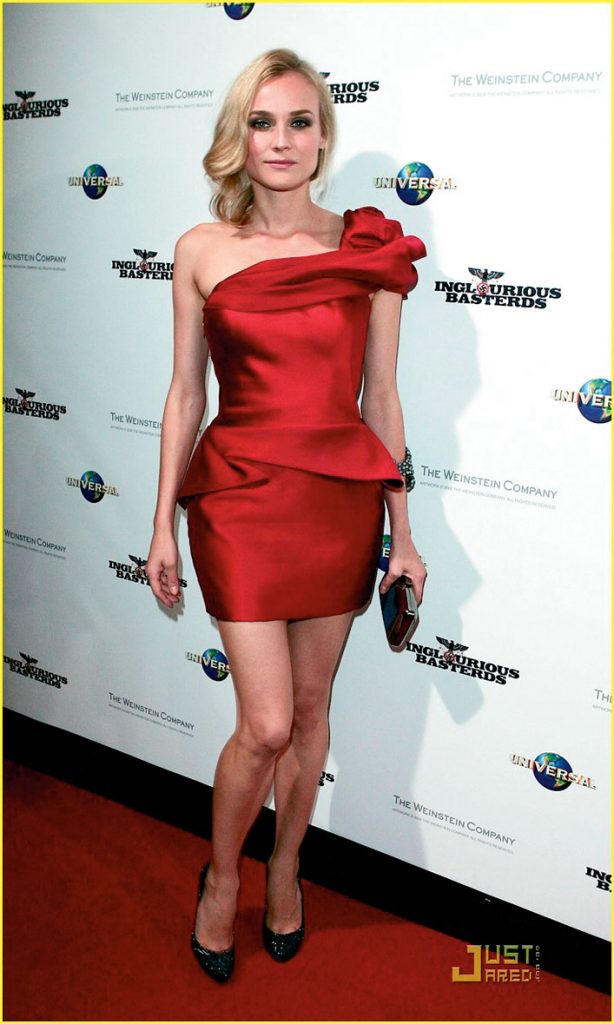
Former fashion model-turned actress, Diane Kruger, is as famous for her edgy style as her selective film choices.The German-born Troy and National Treasure actress, currently based in Vancouver with boyfriend Joshua Jackson (Dawson’s Creek), tells Enigma why working with Tarantino was a dream come true and exactly what being European means to her…
How did this role come about for you?
Well, I wanted Quentin to hire me but he had someone else in mind when he wrote the script. Luckily for me, that didn’t work out. When we met, he didn’t believe that I was German which is really ironic because I’ve spent the last four years trying to get rid of my German accent! So it took a little bit of convincing…
Did you always want to work with Tarantino?
Who doesn’t? I mean of course I never ever thought it would happen. It truly has been like a dream – like winning the lottery. It was pretty cool. And the script was genius; there are not many scripts around that are that good. I read it in ten minutes and loved it.
How was he as a director? Was he helpful to you?
The hardest part was getting the role, because he only hires people that he is 100% convinced are right for the part. He doesn’t really care who you are or what you’ve done before. Quite frankly, he doesn’t care if you are Brad Pitt – if he didn’t think that Aldo was Brad Pitt, he wouldn’t have hired him. He just hand picks everyone. And then, after you are hired, he gives you so much confidence and support. He loves and cares about each and everyone of the characters in his movies; from the smallest part to the biggest part.
How was the atmosphere on the set?
It wasn’t always fun. It was very intense at times. But because Quentin loves making movies, we were all there for the right reason. Sometimes, especially in Hollywood, a director is more or less a hired technician who gets chosen by the studio, so it’s really rare that you find someone who wrote the whole movie and has more experience in movie making than many others combined. It gives you a lot of confidence as an actor.
Your character was an actress who was a secret agent for the U.S, that essentially had to act all the time to stay alive. Was it hard and did you identify with the character?
I thought she was super smart. She could come up with things all the time and I loved that a woman of that time had the status and the privilege to do that. Because of who she was, she used her profound hate for the Nazis to relay information and help plot the downfall of the Third Reich. I loved the idea that my character, Bridget Von Hammersmark, could have contributed to bringing down the Third Reich.
You have lots of very intense scenes in the movie. Which one is your favourite?
Actually, the death scene, just because I loved doing the accent in English. Getting back at the bastards and talking down to Brad was also a really fun thing to do.
Were you asked to over-act a bit more to make your character more theatrical and less ‘real’?
Well, no Tarantino movie is like reality. When you watch movies from the 40’s, all the acting was different. Women, especially actresses at that time, delivered their lines differently. They always speak a little too loud and that was very important to Quentin because he didn’t want to make Bridget 007, she is not a killing machine. He wanted her to be vulnerable at times, so you see the real woman. He wanted her to have two faces. It was fun to do that and overact a little.
How do you think the movie will be received in Germany?
I think it will do very well because so many Germans have had this huge weight on their shoulders about that really dark moment in our country’s history. There is a certain generation that may not think it’s that funny but you know it’s a Tarantino movie, so we’ll see what happens.
What is your favourite Tarantino movie?
Pulp Fiction because I remember when it came out. You see so many movies growing up and very few stay with you all your life. That definitely left a big impact on me.
In the future, would you prefer more European projects or more international films?
Both. I definitely want to make European films, French films, German ones, British ones. It’s very important to me as a person because I feel I am European more than anything. Maybe it’s my generation, but I truly have lived half of my life abroad. I feel for Germany as I feel for France, so I want to make sure that these movies get seen and those stories get told.
What’s next for you?
I am actually going to make a French film and then have another film coming out called Mr. Nobody; so it’s a busy year!
Where do you feel most at home?
I feel at home where my heart is, so Vancouver mostly at the moment. But I also feel at home in Paris because that’s where my house is. The truth is I don’t really care where I live. I have suitcases and clothes everywhere – it’s a true mess!
Which director would you most like to work with next?
I love Darren Aronofsky (Requiem for a Dream); he is one of my favourite directors. Even before I was an actress, I saw Pi at least twice. I thought it was brilliant; very hard to watch but beautiful.
Lawrence Bender:
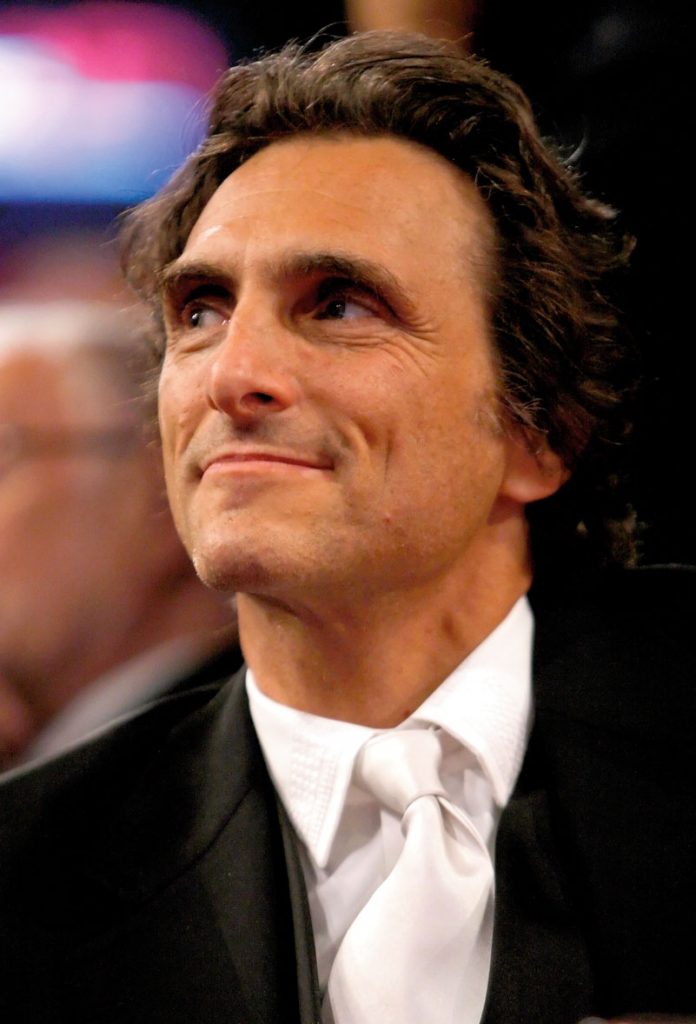 Lawrence Bender was a struggling actor alongside the likes of Mickey Rourke, Christopher Reeve and Jessica Lange, until he met Quentin Tarantino and produced his first film Reservoir Dogs. The rest, as they say, is history. The Inglorious Bastards producer and political activist spills the beans on Tarantino, the art of producing, global warming… and the dark side of women.
Reservoir Dogs was your first project with Tarantino. How did that come about?
I had made a little horror movie for a $100, 000 and the director of that movie was friends with Quentin. We were both broke and struggling then. Our friend put us together and said ‘he needs to meet someone like you and you need to meet someone like him’. We met and hit it off and decided to make the movie together. It was like a first date – you meet somebody for the first time and get to know each other and it all worked out really well.
Explain to us what your job as a producer entails?
Normally a producer finds the material, comes up with a story, develops the story, finds a writer and develops a screenplay. Then they go out and find the director, actors and the money and put it all together. Then they hand it over to a director and it becomes the director’s vision but the producer still oversees the production, marketing, publicity, release, distribution etc. In Quentin’s case, he conceives the film, writes it and directs it. It’s purely his vision and my job is really to support Quentin in making it happen.
What about Inglourious Bastards? How did that come about?
Quentin had been working on it over a long period of time but last January he decided to make it into a movie. He wrote the entire script in six months last year. When he called me, I had no idea he was finishing the script. We checked if Brad Pitt was interested and he was. Then in 13 and a half weeks, we had a cast of 60 actors, and filmed in Paris, Berlin and L.A. We had a crew of a 100 plus people and had to scout 25 locations and build tons of sets. Thankfully with Quentin, raising money comes relatively easy. Many people want to finance his movies; it’s rare that he would lose money on a movie and people want to do business with him because he is a great filmmaker; one of a kind.
How did you go from doing Tarantino movies to doing An Inconvenient Truth with Al Gore? That’s a pretty big leap!
I’ve done a lot of movies but I am very politically conscious. When I saw Al Gore doing his slide show in L.A, I asked myself what I could do to help because this is probably the biggest issue facing us in our life time. I thought, I’m a filmmaker so I’m going to make a movie about this. Al is a great man and I learnt a lot and became very well versed in global warming. We had the best of both worlds because I got to go up on stage for the Academy Awards when the movie won the Academy Award. And I also got to go with Al Gore to Oslo when he received a Nobel Peace Prize. And that’s a ride you cannot explain; it was phenomenal.
What about your visit to Egypt? Was that with Al Gore?
I came to Egypt with a group called the Israeli Policy Forum, which is a Jewish-American Organization. We met with a lot of people in the Knesset and then we went to Ramallah, in the West Bank and met with Abou Mazen. It was about 10 of us, and we met with President Mubarak and his son Gamal, separately. It was a good meeting. We felt Mubarak was very invested in the peace process moving forward.
Apart from An Inconvenient Truth, would you agree that Hollywood doesn’t really produce many movies that have such an impact and important message?
Hollywood’s job is not to produce movies that have social content, Hollywood’s job is to make movies that people want to go and see. But some of us have that aspiration and try to infuse messages into our work. It’s a way to have a passion and do your business at the same time. I am doing a documentary now about nuclear weapon proliferation, for example. When Barack Obama was in L.A recently, he gave a beautiful speech and one of the things he said was that Hollywood can make a difference and he mentioned An Inconvenient Truth as an example. Getting a shout out from the President was pretty cool…
You seem like a very peaceful guy but most of Tarantino’s movies are extremely violent; how is that?
These are movies. As human beings we have aggression, and to me these movies are great ways of getting agression out without hurting a fly. Quentin is a very passive person, in terms of race or prejudice. He is one of the most unprejudiced people I have met in my life. He is a humanist, but he happens to like using violence in movies. And this is not real life, so movies are a safe way to pass these kinds of feelings, because we all have them anyway.
I think agression is a male thing; I mean I can’t watch extreme violence…
Women may be not be able to watch movies like that but the dark side of a woman, I would say, is even more powerful that the dark side of a man. It’s different, of course, less physically violent, but it’s there.
Are you making any movies related to the Middle East soon?
Not at this point. We haven’t found a story yet. I just look for good stories and it depends how they come to me. I haven’t found an Arab-inspired movie that I want to make yet.