

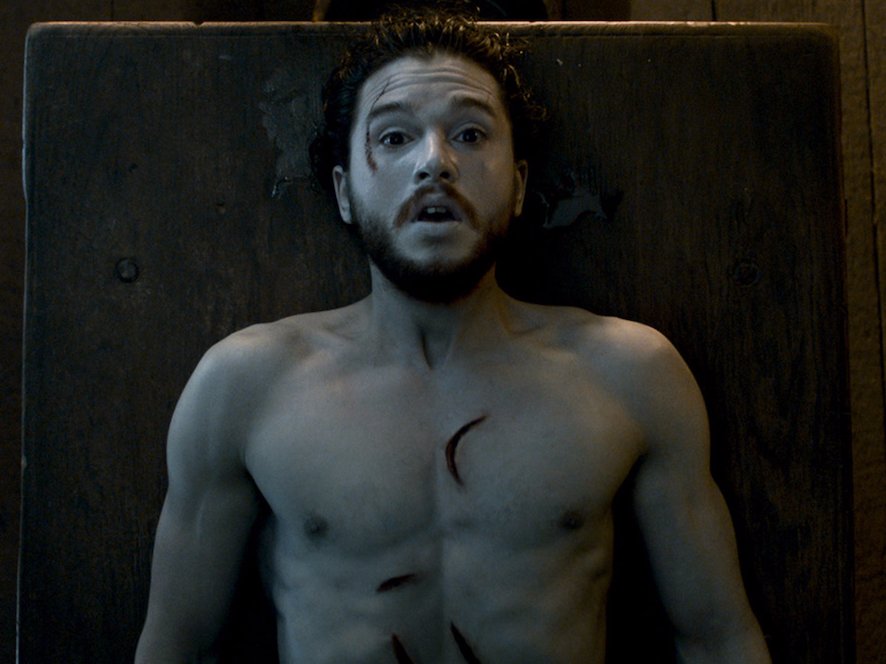
After a five season waiting period, winter is indeed very imminent in Game of Thrones’ uniquely enchanting universe. We’re now officially in endgame territory here. Jon Snow is back from the dead, in whichever iteration of himself that may be. Bran and the Ironborn are back on our screens after a yearlong absence. King Tommen has finally decided to assume leadership in King’s Landing. Tyrion looks set to finally exert his drinking habits and knowledge of things in Merenese politics. Also, what of the Stark girls? A girl’s tutelage was fast tracked, maybe even a bit rushed, in Bravos, while Sansa peculiarly followed Brienne’s lead into a trip to Jon at Castle Black. Indeed, Home, Season Six’s second episode, presented us with so many questions and answers that will have a very telling impact on the show’s concluding chapters.
The most intriguing of which, clearly, is Jon’s timely return to life. Now, since last season’s explosive finale, Jon Snow’s fate has been debated vigorously. Thus, while his return will not come as a particular shock for most of the show’s audience, – he was too important for the show to replace at this late stage of its run- his return was still highly satisfactory in our eyes. If Beric Dondarrion’s previous rebirths are any indicators as well, then our favorite bastard from the North won’t lose any of his heroic tendencies in the fight between the living and the white walkers. Theories about Jon’s mother, and the implications that this could have on the Iron Throne, will now also be ratcheted, as Home featured the first ever appearance of what many believe to be Jon Snow’s actual mother, Liana Stark (if you’re unfamiliar with the theory, just google R+L=J). All of which means that we’re as anxious as we’ve ever been to find out what lies ahead in a Night’s Watch narrative arc that is now even more spiced up by the presence of Ser Davos and Lady Melisandre in the fold. In other words, the night maybe dark and full of terrors elsewhere, but certainly not on the future of the Wall.
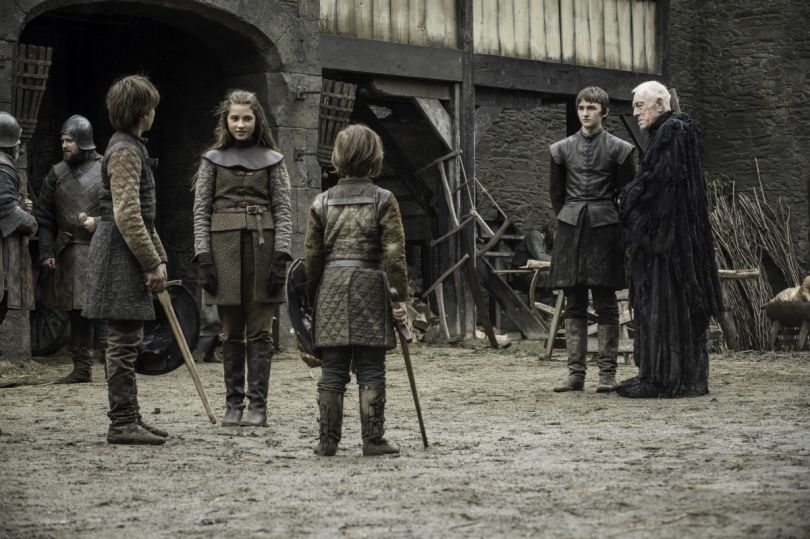
Further North, Bran’s belated return to our screens was equally welcome. While he was only afforded with a very brief scene, his newfound ability to flash back into the past, even to events that he wasn’t alive during which, rendered such limited screen time more than enough to build on his storyline’s considerable allure. Speculatively speaking, such capability might be used by Thrones to shed light on important historical settings that have had a noticeable impact on the show’s present. Even more hypothetically speaking, we wouldn’t be shocked if one of the show’s untold secrets is revealed to be of a paradoxical timing nature, since after all, Bran is among several characters in the show that were named after renowned famous relatives- he took his name from Bran the Builder for instance- that have noticeable similarities with their later namesakes. Then again, we could be completely wrong, and therein lies the show’s greatest strength: its endless possibilities.
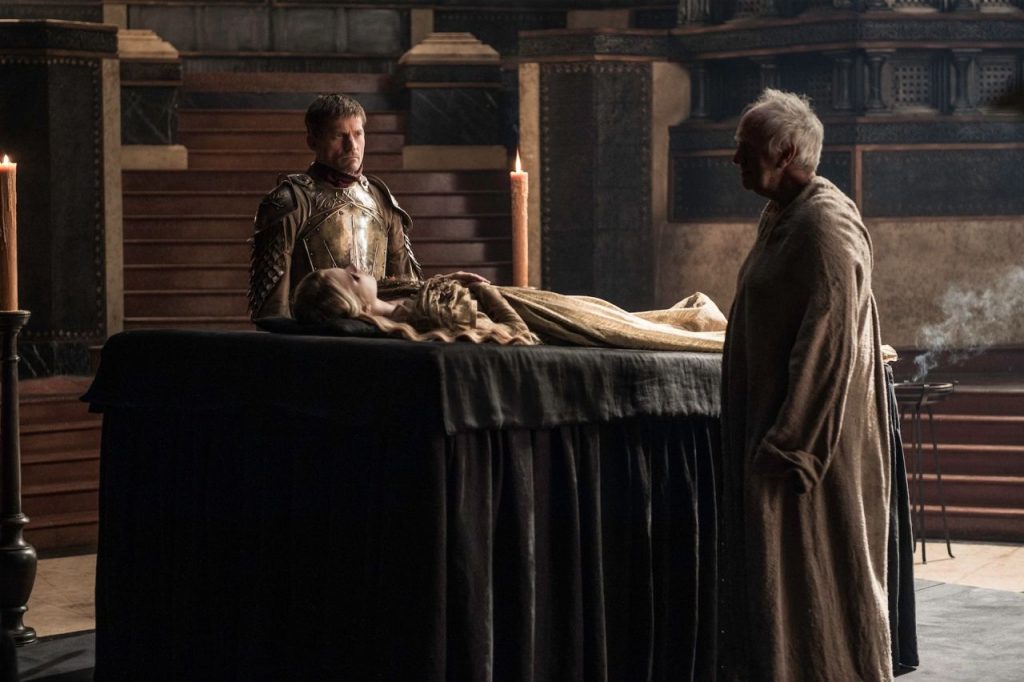
Notwithstanding, so far in Season Six, the show’s most straightforward storyline, the conflict at King’s Landing between the Lannisters and the Faith Militants, is also double functioning as Thrones’ most reliable and consistent source of entertainment. In Home, despite the episode’s dizzying array of thrills and frills, arguably the most nail-biting scene was the long awaited confrontation between Jamie and the High Sparrow at the sept. The best works of art are those that delve into reality without offering us a firm choice between any two extremes. In that sense, the contrasting natures of Jaime’s pragmatism and the High Sparrow’s faith were an epically delivered moral dilemma posed by a show filled with many throughout the years. Needless to say, its conclusion will serve as a metaphoric representation of the ongoing, real-life, ideological conflict between pragmatic politicians and religious fanatics, albeit with the show arguably featuring better acting! Looking ahead into the Iron Throne’s future, though, a bloody battle for power seems inevitable between the Lannisters, the Martells of Dorne, and the Faith Militants, among others. For the sake of the realm, one only hopes that King Tommen had grown past puberty by then.
Speaking of adolescence, both Stark girls have been forced to fast forward this life stage in favor of premeditated adulthood, during which Thrones has seemingly accepted a patchy delivery as the price for continued storyline development. In Bravos, Arya’s training has felt as laborious as anything that we’ve seen on the show over the last two seasons, a stark contrast from her storyline’s strength up until Season Four. Her latest interaction with the realm of the Many Faced God has hinted at the possibility of her regaining back her eyesight, and becoming one of his many-faced assassins. One can’t help but get the feeling that Arya, as is the case with Bran, is being prepared for her role in the show’s endgame, rather than being relied on in the meantime to continuously deliver on her earlier role of breaking gender stereotypes along her remarkable journey; we hope we’re wrong. As for Sansa, the nature of her escapade with Brienne is similarly polarizing. For starters, after all of the betrayals that she’s gone through, with Lord Baelish’s being the most recent, the rate in which she’s trusted both Brienne and especially Theon is very alarming. Further, while she’s not exactly spoilt for choice in her pursuit of a safe haven, surely a trip back to Riverrun, Catelyn Stark’s home before she married Ned Stark, would be a safer choice for her than a trip to Castle Black, especially since she and Jon Snow were never the closest of siblings. All in all, despite understanding the logic behind them, the narrative arcs currently overtaken by both Stark girls leave much to be desired. But hey, at least they’re not part of Ramsay Snow’s infinite slew of victims in their old home at Winterfell.
Indeed, Ramsay’s murder of his father, Roose Bolton, was equal parts shocking and terrifying. While it was satisfying for us to see Lord Bolton stabbed in exactly the same vein through which he dispatched of Robb Stark, the dire consequences that Ramsay’s terror will have on Winterfell negated our joy almost instantly; the fact that he quickly followed that up with the murder of his mother in law and his newborn brother was doubly appalling. In doing so, Ramsay’s motives were very clear: to claim the North before his trueborn brother could become a threat to his succession claim. All of which means that the future of the North will be as murky as ever with such a madman in power, and backed by several powerful Northern families, with the Cathstarks chief among them. Roose Bolton was many things, but at least he was an intelligent politician who never overestimated his power. The same can’t be said for his bastard son. Ramsay is fierce, and more importantly crazy, enough to go on in his plan of going after the now reborn Jon Snow and the Night’s Watch in an effort to maintain his stronghold over the North. We wouldn’t rule out a march South against the realm, either. Some people just want to watch the world burn, and Ramsay is definitely one of them. Look for Lord Baelish to be on his raven-speed-dial list.
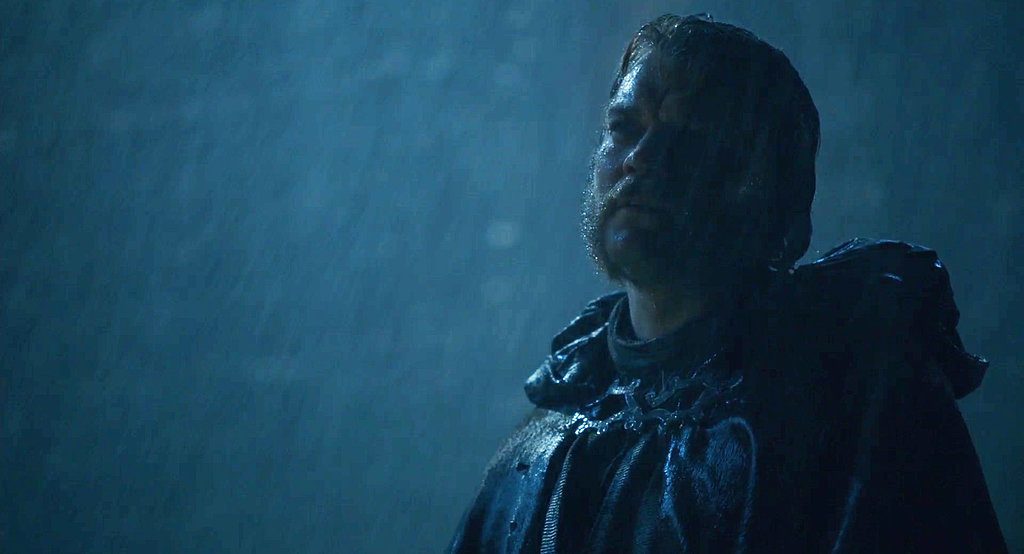
The situation up at the Iron Islands is equally as dire. Euron Greyjoy made one hell of a series debut in murdering his own brother, Balon. His unknown motivations and back story only served to add tantalizing mystery to an area of the Westerosi map that hasn’t been properly exposed throughout the show’s run. With Yara Greyjoy’s succession evidently in question, the islands’ waters look murky at best. Theon’s planned return to the fold won’t add any stability, either. In fact, it will probably lead to further divisions among the Ironborn. When he was last at the islands, Theon wasn’t respected by any of his fellow islanders, even while his father served as Lord. Now, as Balon’s only living son, Theon theoretically has the strongest blood claim to the throne. If he somehow manages to rid himself of all his Reke drama, then some islanders might favor his rule over that of Yara, despite her possessing all the necessary leadership qualities required. Westeros is, after all, nothing if not highly patriarchal.
Looking ahead, the table is set for the rest of the show’s Sixth Season to make us all forget about the show’s tepid Fifth Season. Indeed, almost all of Thrones’ major storylines are well-built and bustling with intrigue. Today’s third episode might feel like a disappointment compared to Home’s wonderfully crazy unpredictability. Nonetheless, it will likely do more than enough to satisfy our weekly Thrones needs, with the King’s Landing, Dorne, and Daenerys storylines taking center stage. The end may be near, but the journey is still as enjoyable as it’s ever been. As we were just reminded last week, what’s dead may never die. Well, at least in our minds.